Transform Your Garden with Overturned Flower Pots


Ever thought of making your yard look like it's filled with cascading blooms? This magical landscaping trick has won over DIY fans Creative overturned pot landscaping turns simple pots into whimsical highlights, bringing life and charm to any outdoor area.
This method is all about being easy and flexible. It works wonders on small balconies or big yards. You don't need to be a pro to make it look amazing—just a bit of creativity and some basic stuff.
It's a clever way to make planters look like they're pouring plants onto the ground. It's easy enough for a weekend project. In this guide, you'll find ideas, tips on picking plants, and how-to steps to make your garden with overturned flower pots a hit with everyone who sees it.

The Whimsical Appeal of Toppled Pot Garden Design
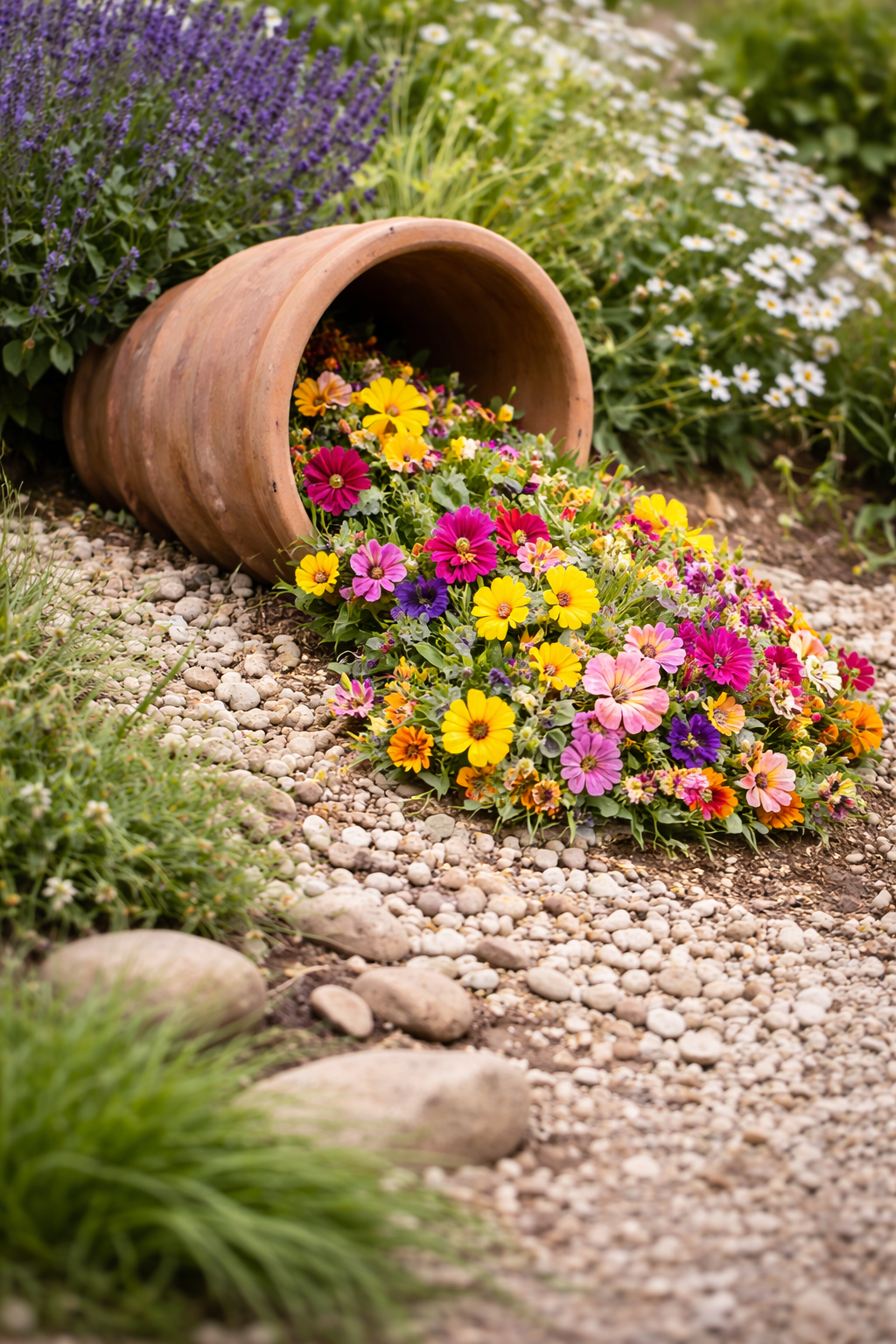
Toppled pot garden design adds magic to any outdoor space. It turns ordinary containers into enchanting storytelling pieces. These arrangements make it seem like colorful blooms are flowing from tipped pots.
A whimsical spilled planter display makes it look like flowers are flowing from overturned containers. This adds movement and depth to garden beds. Your garden becomes more dynamic, guiding the eye and creating focal points.
These designs bring a playful touch to gardens. They contrast with formal structures, making spaces feel more welcoming. Visitors enjoy the creative presentation, sparking conversations.
These displays are perfect for cottage-style and fairy gardens. They also add a delightful contrast to structured gardens. Toppled pot designs fit almost any garden style.
Gardeners can use various pot sizes and materials. From terracotta to resin, the choices are endless. This design's flexibility allows for endless creativity.
Color schemes can match your garden's style. Choose from rustic, eclectic, or monochromatic themes. Explore inspiring flower planters to find your perfect match.
Personal expression is easy with tipped containers. Each arrangement shows your unique taste. The design's informal nature encourages creativity without the need for perfection.
These displays are appealing all year round. Refresh your displays with seasonal plants. Spring might have pansies and petunias, while fall has ornamental cabbage and mums.
This flexibility keeps your garden fresh and interesting. Your outdoor space evolves with the seasons. The same display can tell different stories each year, keeping it engaging.
Toppled pot garden design tells stories through visuals. It suggests tales of wind or playful garden fairies. These narratives add depth and interest, unlike simple plantings.
Creative Garden with Overturned Flower Pots Ideas
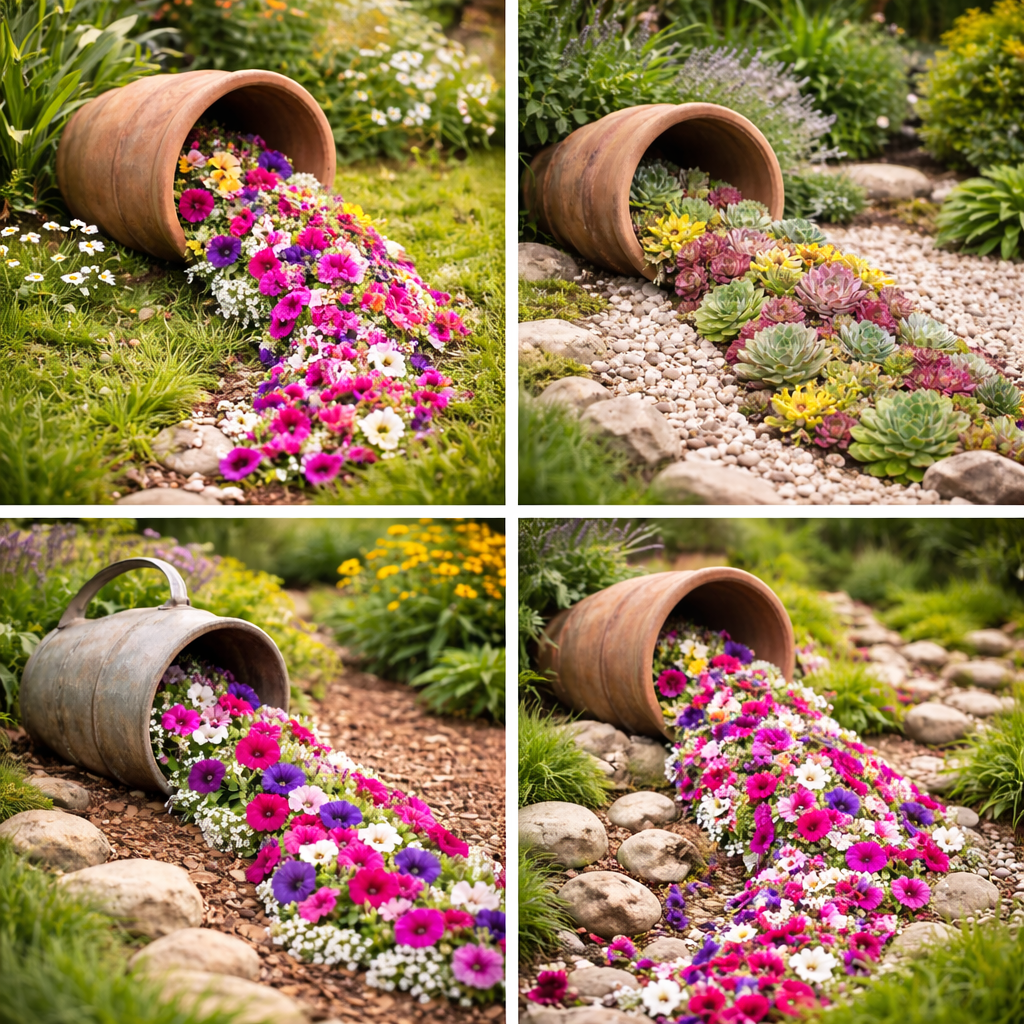
Overturned flower pots can turn your garden into a flowing river of color or a magical miniature world. These spilled planter ideas make ordinary pots into stunning focal points. They catch the eye and bring life to your outdoor space. Whether you like bold colors or soft elegance, there's a perfect design for you.
Here are some creative ways to use overturned pots in your garden. Each style adds its own charm and can fit your garden's look and your taste.
Cascading Flower River Display
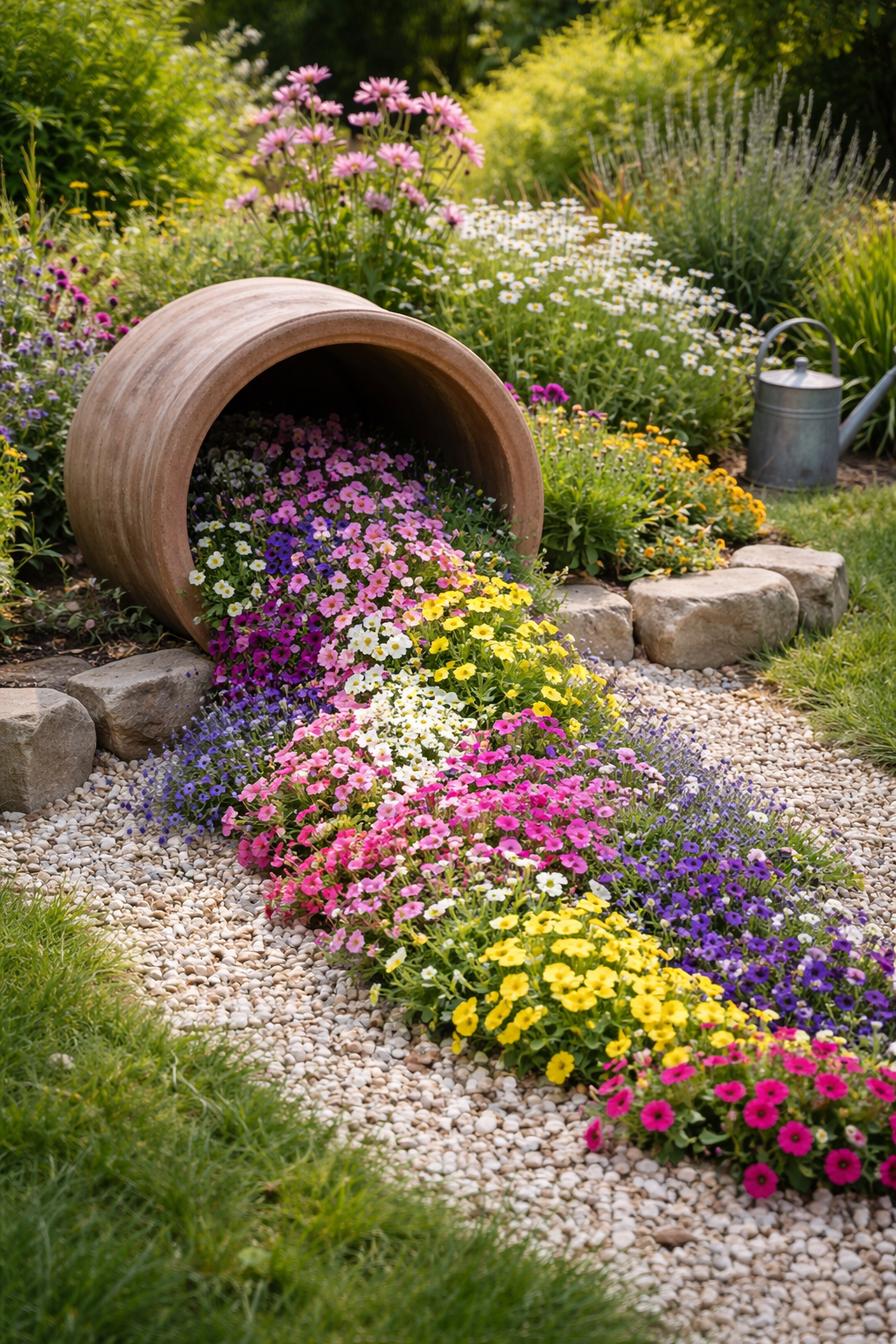
A cascading flower pot arrangement looks like a stream of blooms. Place an overturned pot slightly higher to let gravity flow your plants. This works great along paths, borders, or as a lawn feature.
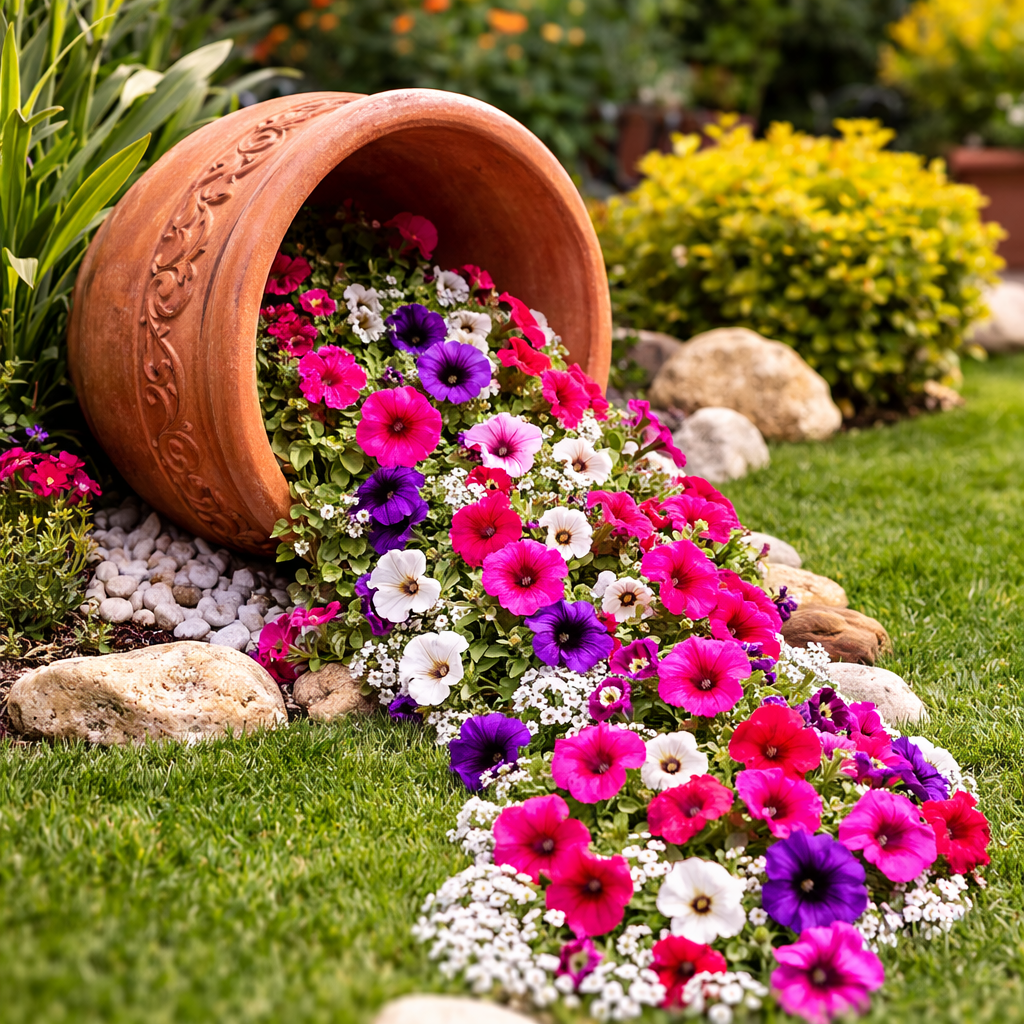
Use trailing flowers like petunias and lobelia for a colorful river. Plant them close together near the pot, then spread them out. This creates a water-like effect that draws the eye.
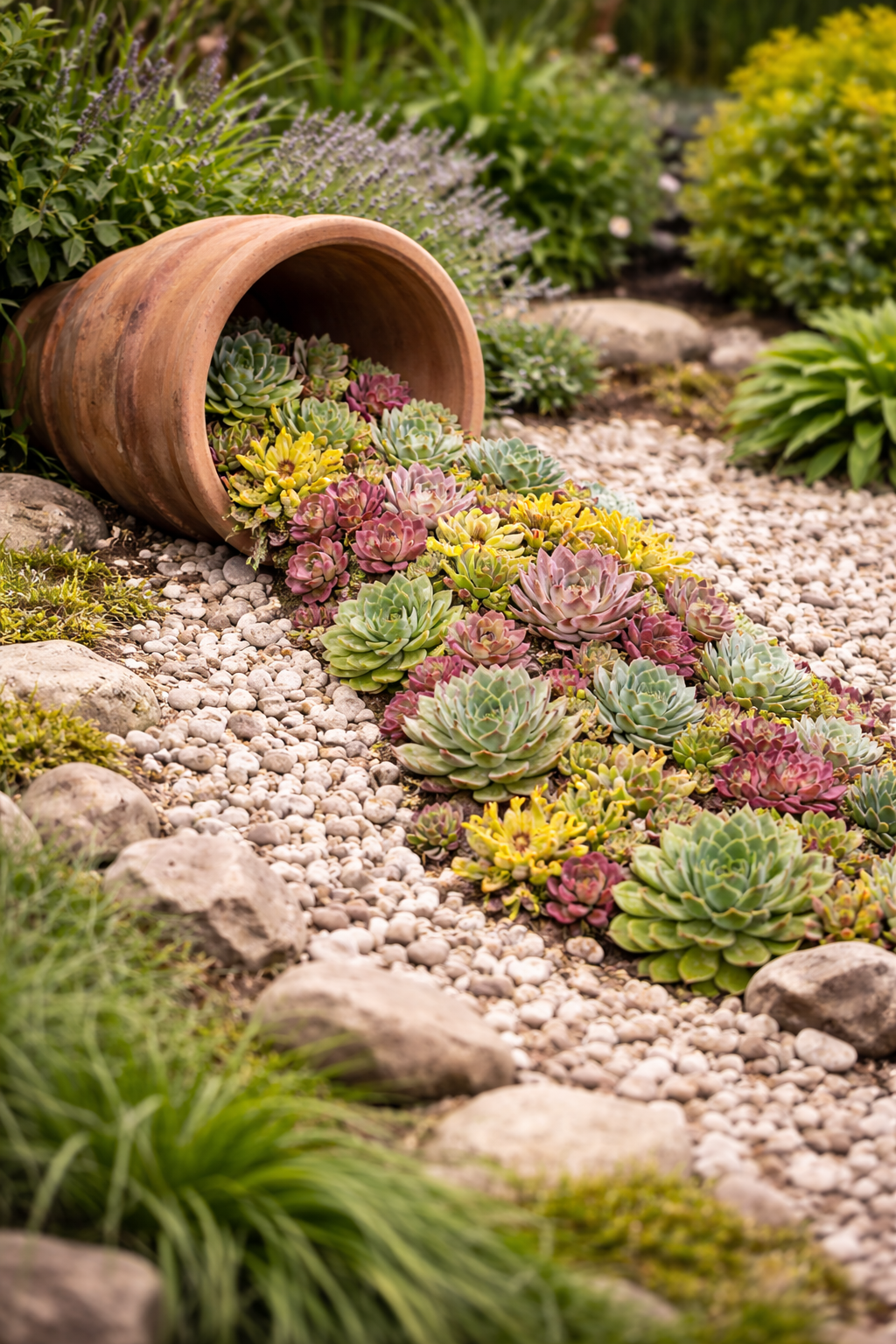
For easy care, try succulents in different colors. They cascade beautifully and need little water. This is perfect for dry areas or busy gardeners.
Fairy Garden Spilled Container Magic
Turn pots into tiny worlds with fairy garden spilled containers. These displays use small plants and accessories to tell stories. Start with a medium pot to create your tiny universe.
Choose small plants like baby tears and dwarf mondo grass. They fit well with your tiny world and don't need much care. Place them to make paths, gardens, and landscapes.
Add fairy figures, tiny furniture, and small lanterns to tell your story. These creative clay pot crafts spark conversations and become garden highlights. Choose accessories that match your plants in size.
Keep your fairy garden delicate with gentle care. Use a spray bottle for watering and check accessories often. Protect it from rain and strong winds.
Tiered Hillside Arrangement
Use sloped terrain for dramatic pot displays. Place pots at different levels to create a stunning cascading effect. This is great for gardens on hills.
Start with the biggest pot at the top, then use smaller ones down. This size order makes your display look natural. Place pots 18-24 inches apart for plants to grow and connect.
Choose plants that add height and texture. Use tall plants at the top, then medium, and end with low-growing ones. This adds depth and beauty to your hillside.
Monochromatic Spilled Planter Groupings
Grouped overturned pots in one color make a stunning statement. This look is elegant and professional. Clustering pots in one color creates a cohesive design.
White flowers make a garden glow, especially at night. They're elegant and fit any style. White blooms also complement green lawns.
Purple plants add a royal touch. They contrast well with green and attract butterflies. Lavender and verbena are great choices.
Golden flowers bring warmth to your garden. Marigolds and yellow lantana are vibrant and sunny. They work well with stone or brick.
For monochromatic displays, use three to five pots of different sizes. Mix textures and shapes in your color family. This keeps your display interesting and cohesive.
How to Build Your Tipped Over Container Garden
Building a tipped over container garden is easier than you think. It combines creativity with gardening techniques to create a stunning focal point. This project works well in any space, from small patios to large backyards.
Success comes from careful preparation and understanding key principles. Choosing the right containers and plants is crucial. Let's explore what you need to know to bring this whimsical garden to life.
Planning Your Layout and Choosing Materials
Before you start, planning your display is key. Think about how it will fit into your landscape. Consider the aesthetic you want and how it will complement your garden.
Sketch out a design or take photos of potential locations. This helps you visualize the final product and spot any challenges. Gather your materials ahead of time to ensure a smooth installation.
Selecting the Perfect Pots
The containers you choose are crucial for both looks and longevity. Pots between 10 and 16 inches in diameter work best for most gardens. They provide enough visual impact without overwhelming spaces.
Terracotta pots add classic charm but can crack in cold weather. If you live in a cold area, bring them indoors during winter.
Resin and plastic containers are durable and weather-resistant. They mimic natural materials and are easy to move. This makes adjusting your display simple as plants grow and seasons change.
Don't overlook budget-friendly options for containers. Garden centers and home improvement stores often have sales. Thrift stores, garage sales, and online marketplaces also have affordable options.
Picking the Ideal Location
Most flowering displays need at least six hours of direct sunlight daily to bloom well. Observe your yard to find sunny spots. South-facing locations usually get the most sun.
Choose a location where you'll see it from windows, patios, or walkways. This makes it easier to enjoy and remember to water and maintain.
Accessibility is important. Pick a spot you can easily reach with your hose or watering can. Areas near water sources make care easier, especially in hot weather.
Check the natural drainage of your site before choosing a location. Avoid low-lying areas that collect water. A slight slope enhances the natural look of your design.
Best Plants for Cascading Effects
Choosing the right plants is key to a stunning display. Mix different types for depth and interest. Think about texture, color, bloom time, and growth habits.
Consider your USDA hardiness zone when picking plants. Annuals add color seasonally, while perennials provide structure year-round. This reduces replanting and keeps your garden looking good all season.
Ground Cover Options
Creeping Jenny is a top choice for spillover effects, with bright chartreuse foliage. It grows quickly and tolerates sun and shade. Its trailing stems create a flowing look.
Sweet alyssum produces clouds of tiny flowers with a sweet scent. It self-seeds and blooms from spring to fall. It's perfect for a soft, romantic look.
Creeping thyme offers beauty and fragrance when brushed or stepped on. It's hardy and drought-tolerant. Various colors are available, with small flowers in summer.
Sedum varieties add succulent texture and drought tolerance. They thrive in hot, dry conditions. Their leaves store water, reducing watering needs in summer.
Flowering Spillers
Petunias are favorites for their color and blooming. Modern varieties like Wave and Supertunia resist diseases and bloom well. They perform well across the U.S.
Calibrachoa, or Million Bells, produces hundreds of small blooms on trailing stems. They come in many colors and tolerate heat well. They prefer consistent moisture but forgive occasional lapses.
Bacopa creates a delicate, cottage-garden look with tiny flowers. It's shade-tolerant and works well in areas that don't get full sun. Its subtle beauty complements bolder plants.
Lobelia offers intense blooms on arching stems. It performs best in spring and fall. In mild climates, it can bloom almost year-round.
Verbena offers upright and trailing varieties for layered plantings. Its flowers attract butterflies and hummingbirds. It's heat and drought-tolerant, making it great for warmer areas.
Step-by-Step Assembly Process
Now, it's time to bring your vision to life. The assembly process is straightforward once you know the basics. Take your time with the initial setup for stability.
Work on a mild, overcast day if possible. Early morning or late afternoon hours are also good. Having all materials within reach streamlines the process.
Securing Your Pots
Partially burying the pot opening creates a natural and stable foundation for your display. Dig a shallow trench for about one-third of the pot opening. This prevents shifting during storms and creates a natural spill effect.
Use landscape fabric beneath and around the pot to suppress weeds and allow drainage. Secure the fabric edges with staples or rocks. This barrier reduces maintenance by preventing unwanted plants.
Create a soil berm behind the pot to hold it at the desired angle. Pack the soil firmly to prevent settling. The berm should withstand heavy rain and strong winds.
Test the stability of your pot before adding plants. A properly secured container shouldn't rock or shift much. Make adjustments to the soil support as needed for solid positioning.
Planting Technique for Natural Flow
Fill the pot with quality potting soil, not garden soil. Premium potting mixes retain moisture and drain well. This provides the best growing environment for container plants.
Place your tallest plants near the pot opening for maximum impact. Plant them densely for immediate fullness. This saves weeks of growth to fill in.
Extend your planting outward in a natural spill pattern. Mix different plant heights and textures for depth. Imagine water flowing from the pot and follow that line with your plant placement.
Incorporate taller accent plants throughout the spill area. These vertical elements add movement and guide the eye. Grasses, upright coleus, or compact perennials work well for this.
Get your materials and pick your favorite plants now. Start your first container garden this weekend. The joy of making something beautiful with your hands is priceless. Your outdoor space will thank you for the charm.