Tin Can Lid Dreamcatcher Strung with Feathers


Turn everyday recycled items into stunning bohemian wall art that catches dreams and sparks imagination. This project gives new life to items you'd usually throw away. You'll see how simple tin can lids become beautiful, handmade pieces for any room.
This upcycled dreamcatcher craft mixes ancient wisdom with today's green living. The strong metal circles from tin can lids are perfect for weaving detailed patterns. You're not only reducing waste but also making something magical and meaningful.
Whether you're new to crafting or have lots of experience, this eco-friendly dreamcatcher tutorial is for you. It's easy to follow and needs just a few things you might already have at home. You can add your own flair with colorful threads, beads, feathers, and personal touches that show off your style.
Get set to enjoy sustainable crafting that's both enjoyable and meaningful. Your finished dreamcatcher will bring a charming bohemian accent to any room. Let's start this fun DIY journey together!
Materials and Tools You'll Need
Starting a dreamcatcher project from recycled materials is exciting. First, gather the right supplies to make your DIY tin can dreamcatcher project a success. This guide will help you get everything you need for your creative journey.
Essential Supplies for Your Tin Can Lid Dreamcatcher
Choosing the right materials is key. These supplies will form the base and web of your dreamcatcher. Let's look at what you'll need to bring your dream to life.
Recycled Materials
Your dreamcatcher starts with metal lids, 3 to 5 inches in diameter. Coffee can lids are great because they're sturdy and have smooth edges. Soup and tuna can lids are perfect for smaller dreamcatchers.
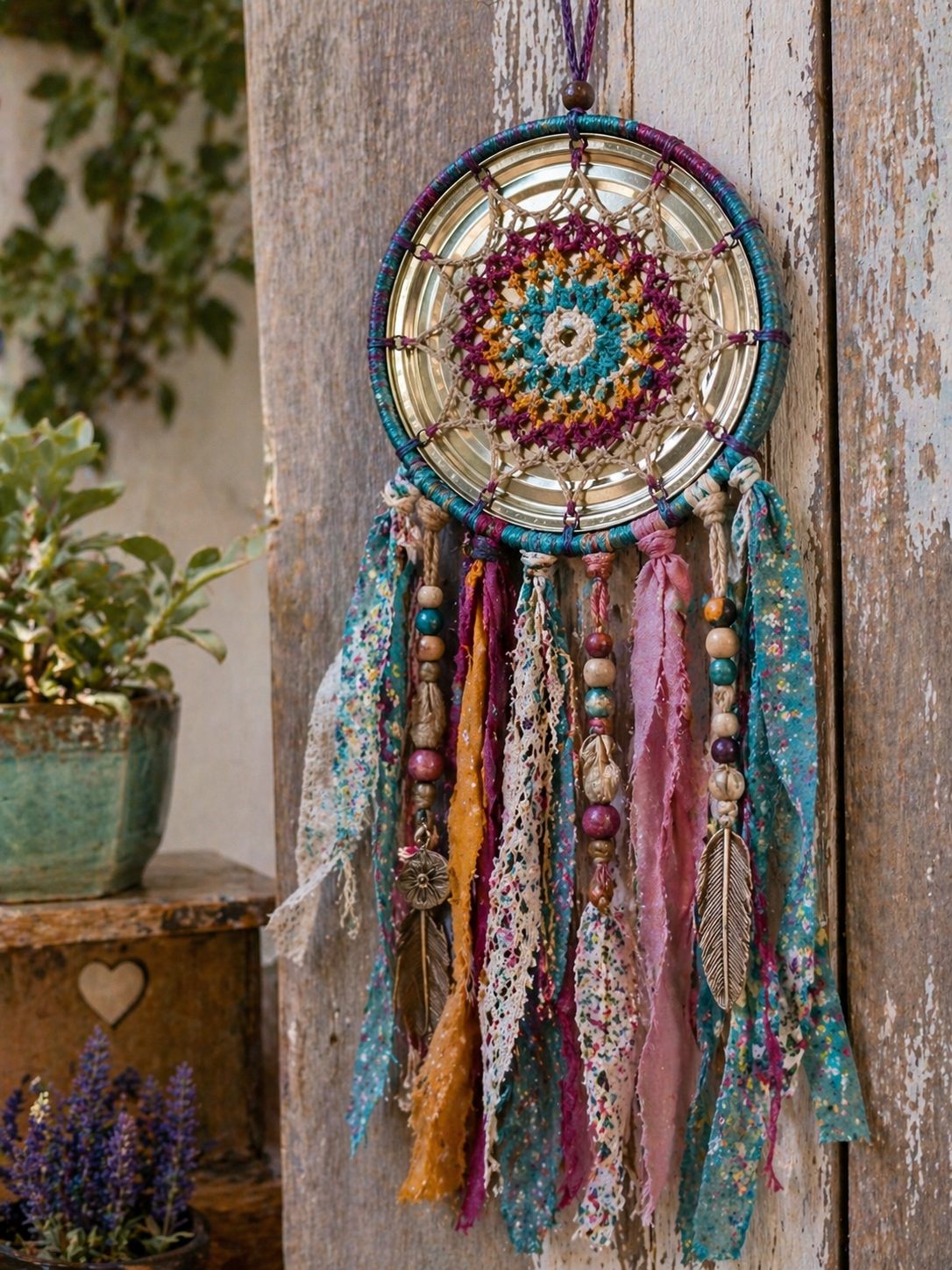
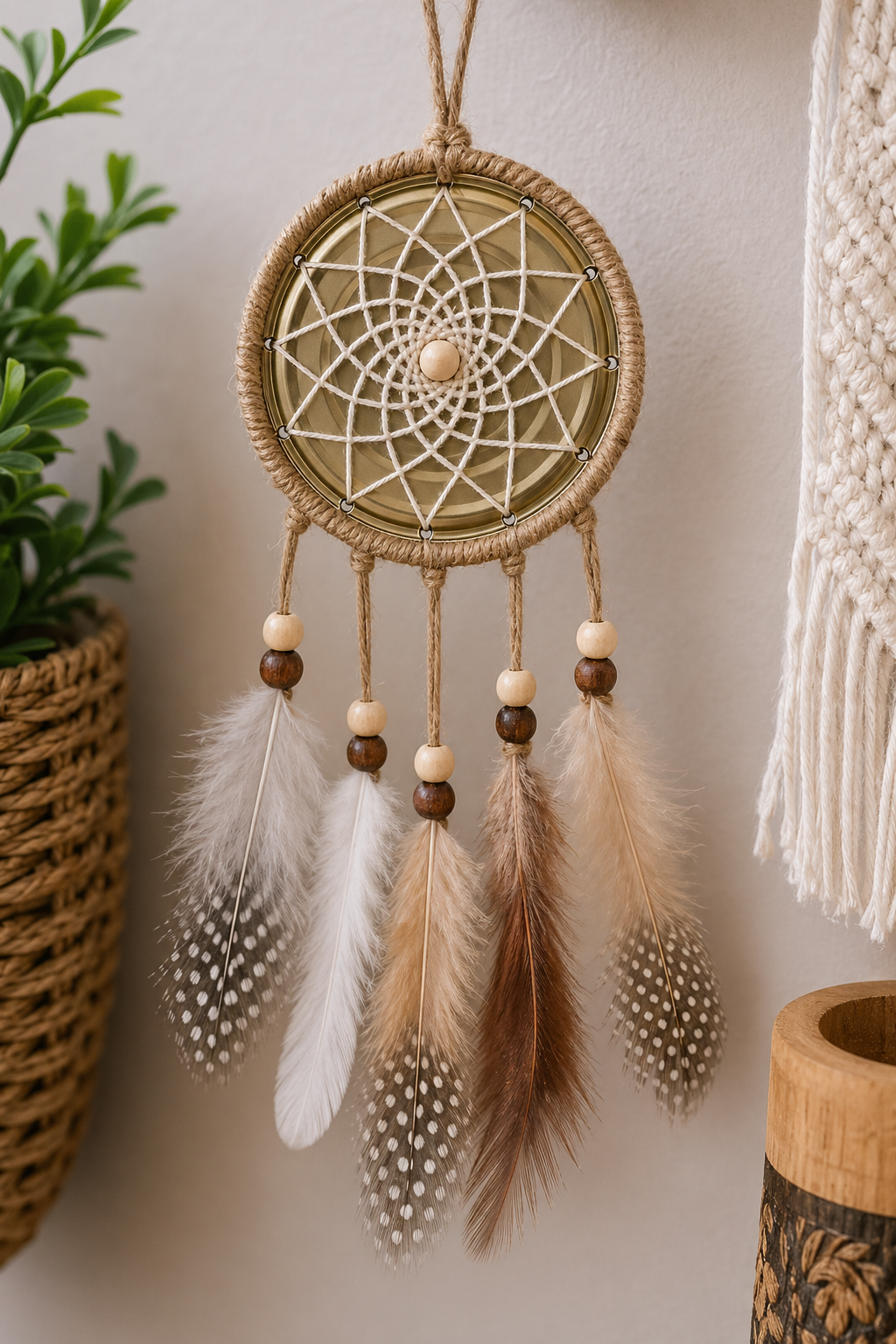
For the web, you'll need string or cord. Embroidery floss adds colorful patterns that catch the eye. Hemp cord gives a natural look that many like.
Thin yarn is versatile in colors and textures. Pick materials that fit your style and the look you want for your recycled metal dreamcatcher project.
Feathers add a traditional touch. You can find affordable feathers at craft stores like Michaels or Hobby Lobby. Natural feathers from craft suppliers are perfect for authentic designs.
Beads let you personalize your project. Wooden beads have a rustic feel, while glass beads add sparkle. Plastic pony beads are budget-friendly and come in rainbow colors.


Crafting Tools
A drill with a small bit makes holes easier. If you don't have a drill, a hammer and nail work too. Start with 8 to 12 holes for best results.
Sandpaper or a metal file is crucial for safety. Smooth all sharp edges before starting your weaving to avoid cuts. Medium-grit sandpaper (120-150 grit) is perfect for this.
Sharp scissors cut through cord and ribbon cleanly. A ruler or measuring tape helps you cut strings evenly. Needle-nose pliers can help pull cord through tight spaces if needed.
Optional Decorative Materials
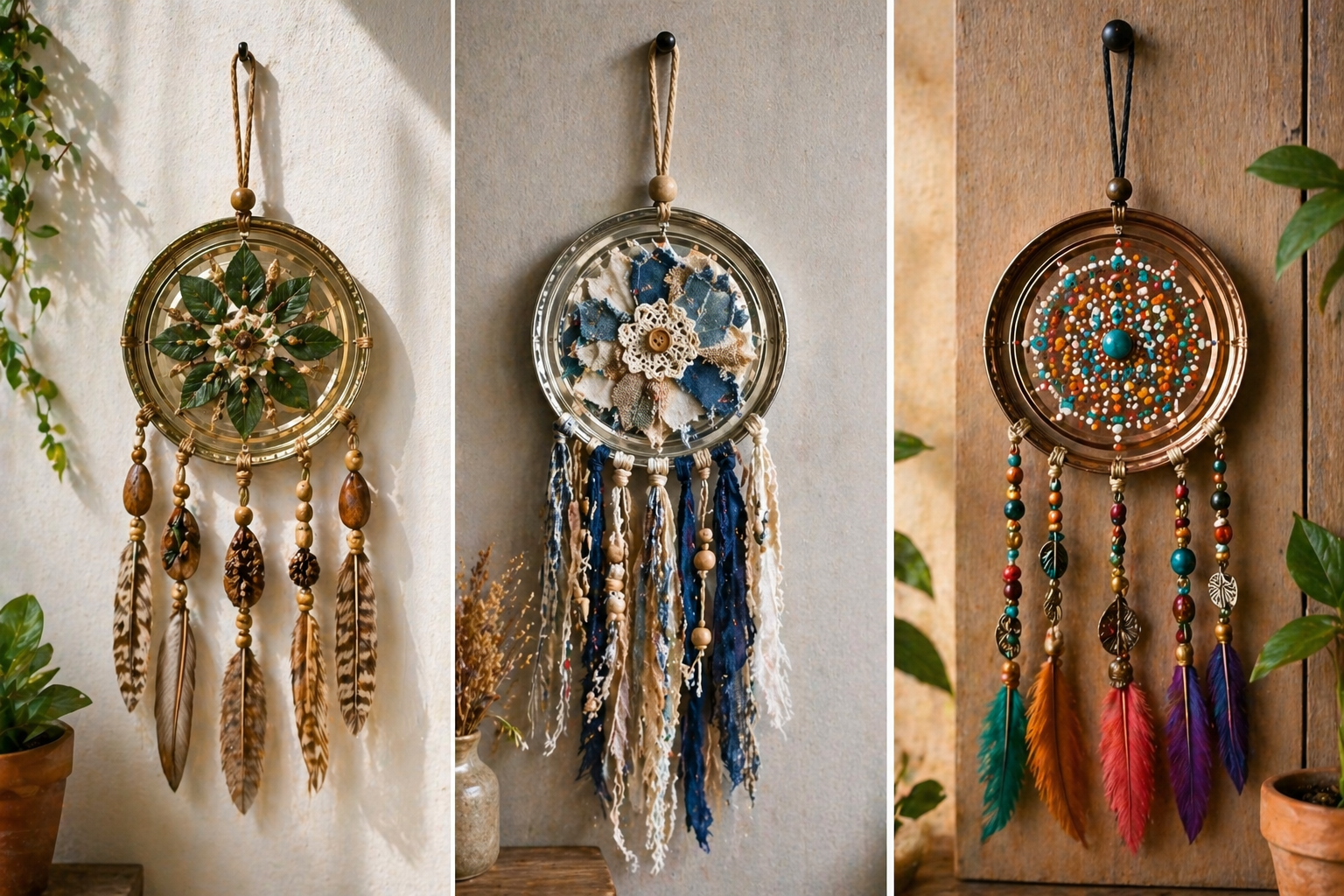
Adding personal touches can elevate your aluminum lid craft ideas. Acrylic paints from brands like Apple Barrel or Folk Art can transform metal into colorful canvases. Metallic paints create stunning effects that shimmer in the light.
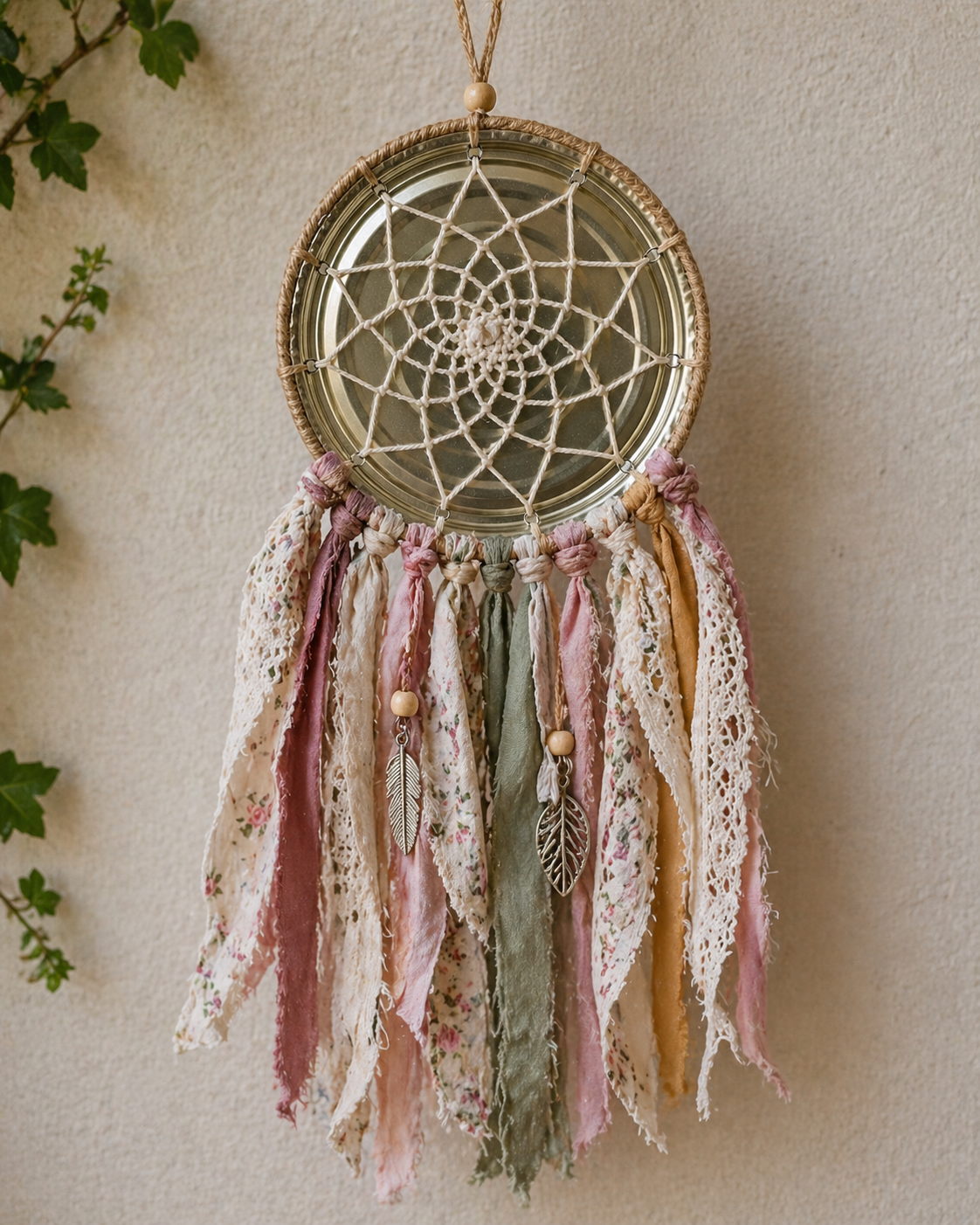
Decorative ribbons add texture and movement. Satin ribbons provide elegant draping, while burlap ribbons give a farmhouse look. Mix different widths and colors for interest.
Charms and small trinkets make your creation unique. Tiny bells add gentle sound when the dreamcatcher moves. Seashells bring beach vibes if you collected them on vacation.
Gemstone beads like amethyst or turquoise add spiritual meaning. Crystal beads catch and reflect light beautifully. These special touches make your dreamcatcher a one-of-a-kind treasure.
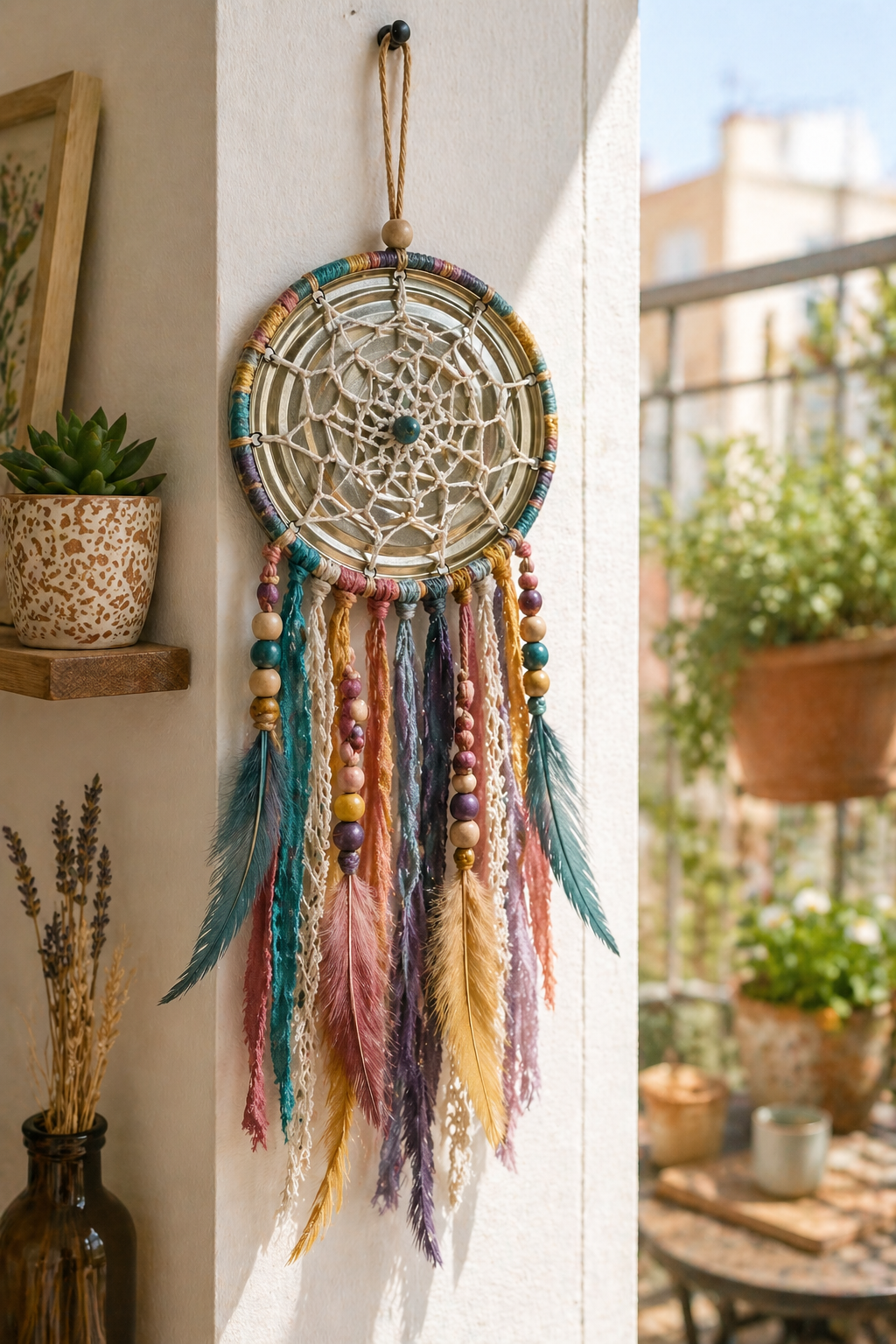

Step-by-Step Guide to Making a Dreamcatcher made with tin can lids
Let's start making your unique dreamcatcher from tin can lids. This project turns recycled materials into beautiful decor. Each step builds on the last, making a piece you'll be proud to show off.
This project takes two to three hours to complete. Take your time to ensure quality. Your patience will be rewarded with a stunning piece of art.
Step 1: Prepare and Clean Your Tin Can Lid
Start with a clean lid to set the foundation. This step ensures safety and prepares your lid for creativity. A clean surface makes the next steps easier.
Removing Sharp Edges
When working with metal, safety is key. Check your lid for sharp edges that could hurt you.
Use a metal file to smooth out rough spots. File in one direction with firm strokes. Keep filing until you can run your finger around the edge without feeling sharp points.
Sandpaper is great for a final touch after filing. Start with medium-grit sandpaper (120-grit) and move to fine-grit (220-grit) for a smooth finish. This makes your dreamcatcher look professional and smooth.
Cleaning and Painting Options
Wash your lid with warm soapy water to remove residue and labels. Scrub both sides with a sponge or brush. Rinse well and dry with a clean towel.
For tough labels, soak the lid in warm water for ten minutes. The adhesive will soften, making removal easier. Use rubbing alcohol on a cloth to remove any sticky residue.
Painting adds color and personality to your dreamcatcher. Apply a metal primer first if you plan to paint. This helps paint stick better and prevents chipping. Use acrylic paints for bright colors or spray paint for even coverage.
Let paint dry completely before moving on. This usually takes two to four hours, depending on humidity. Apply a second coat if needed for better color.
Step 2: Create Holes Around the Lid's Edge
Creating holes is key for your web pattern. This step needs careful measurement and steady hands. The holes anchor your dreamcatcher web.
Marking Hole Positions
Use a ruler and permanent marker to mark holes around the rim. The number of holes depends on your lid size and web density. Twelve to twenty holes work well for most lids.
Measure the lid's circumference and divide by your chosen hole count. For example, a twelve-inch circumference needs holes one inch apart for twelve total holes.
Mark each spot with a small dot about a quarter-inch from the edge. Double-check your measurements before drilling. Even spacing makes your dreamcatcher look balanced and professional.
Drilling Techniques
Wear safety glasses before drilling. Place your lid on a scrap piece of wood to protect your work surface. The wood backing prevents the drill bit from slipping.
A 1/8-inch drill bit is ideal for most string types. Hold the drill perpendicular to the lid surface. Apply steady, moderate pressure while drilling. Let the drill bit do the work rather than forcing it through the metal.
Alternatively, use a hammer and nail for a no-power-tool approach. Place the nail point on each marked spot and tap firmly with the hammer. This method works great for thinner lids and adds to the handmade charm of your project.
Step 3: Weave the Dreamcatcher Web Pattern
The weaving process brings your dreamcatcher to life. This traditional technique creates the iconic web design. Take your time and enjoy this meditative process.
Starting the Web
Cut a length of string about six times the diameter of your lid. Thread one end through any hole from the back to the front. Leave a three-inch tail and tie a secure knot.
Bring the string across to a hole on the opposite side of the circle. Thread it through from front to back. Pull gently to create slight tension without warping the metal.
Continue this pattern, skipping two or three holes each time. This creates the foundation of your web. Work your way around the circle until you return to your starting point.
Creating the Spiral Pattern
Once you complete the first round, start the spiral. Instead of going through the holes, loop your string around the center point of each strand from the previous round.
Pull each loop snug but not too tight. The weaving technique should create gentle tension that holds its shape. Continue spiraling inward, maintaining consistent spacing between loops.
As you near the center, the spaces become smaller. Adjust your tension accordingly to keep the web balanced. Finish by tying off the string securely in the center or threading it back through previous loops.
Step 4: Add Beads and Decorative Elements
Beads add visual interest and personal flair to your creation. Thread them onto your string during the weaving process or add them afterward. Choose beads with holes large enough to accommodate your string type.
Place larger beads near the outer edge and smaller ones toward the center for visual balance. Mix colors and textures to create depth. Wooden beads complement the upcycled aesthetic beautifully.
Secure beads by knotting the string on either side. This prevents them from sliding around. You can also add charms, buttons, or small found objects that reflect your personal style and make your tin can lid art truly unique.
Step 5: Attach Hanging Strings and Feathers
The finishing touches complete your dreamcatcher's authentic appearance. Cut three pieces of string in varying lengths, typically six to twelve inches long. Attach them to the bottom three holes of your lid.
Thread each string through its hole and tie a secure knot. Let the strings hang down naturally. Add feathers by tying them to the bottom of each string or securing them with a dab of craft glue.
Create a hanging loop at the top by threading a longer piece of string through the top hole. Tie the ends together, forming a loop large enough to fit over a nail or hook. Test the strength of your hanging loop before displaying your finished repurposed lid dreamcatcher.
Trim any excess string ends for a neat appearance. Your sustainable dreamcatcher is now ready to hang and enjoy!
Conclusion
You've turned a simple tin can lid into a beautiful piece of art. Your dreamcatcher shows off your creativity and gives old materials a new life. This is a great way to avoid throwing things away.
This DIY project is just the start. You can make many dreamcatchers in different sizes for your walls. Try mixing colors to match your home. Every piece you make helps you grow and creates something special.
Your dreamcatcher is a wonderful gift for friends and family. Tell them the story of how you made it. Handmade gifts with a story behind them are always cherished. You might even start selling them online or at local markets.
Keep looking for more upcycled projects. Tin can lids are really versatile for art. Your journey in sustainable crafting is just starting. Each project you finish is a step towards being more creative and caring for our planet.
Show off your dreamcatcher with pride. It's a reminder that amazing art can come from unexpected places. Your creativity and care for the environment make a big difference in our world.