Christmas Decorations with Dried Bouquets for Your Home

Picture a tree hung with tiny bunches of roses and lavender, glowing soft pink and purple under warm string lights. That scene is easy to build with Christmas decorations with dried bouquets, and it feels calmer than tinsel and plastic. Dried blooms bring natural color and texture, plus a soft, subtle scent that pairs well with eucalyptus, orange and clove.
The flowers you grew last summer can become this year's holiday supply. Your garden simply keeps giving, long after the frost.
When the season ends, natural pieces like these can go into the compost, which is a big help in a small apartment with no room for boxes of decor.
Which Dried Flowers Work Best for Christmas
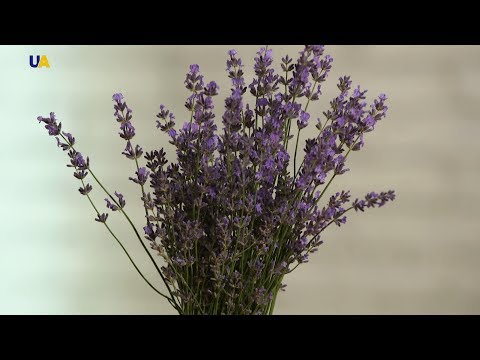
Roses, lavender and baby's breath are the most reliable trio for holiday decorating. Roses and lavender air-dry well and keep their shape, so they look good for weeks. Dried cream-colored baby's breath looks like fresh snow when you tuck it into a tree.
Color tone matters as much as the type of flower. Faded dried hydrangeas lose their bright summer shade, but they still blend nicely with cream and gold themes. Soft, muted blooms often look more festive than bold ones next to warm lights.
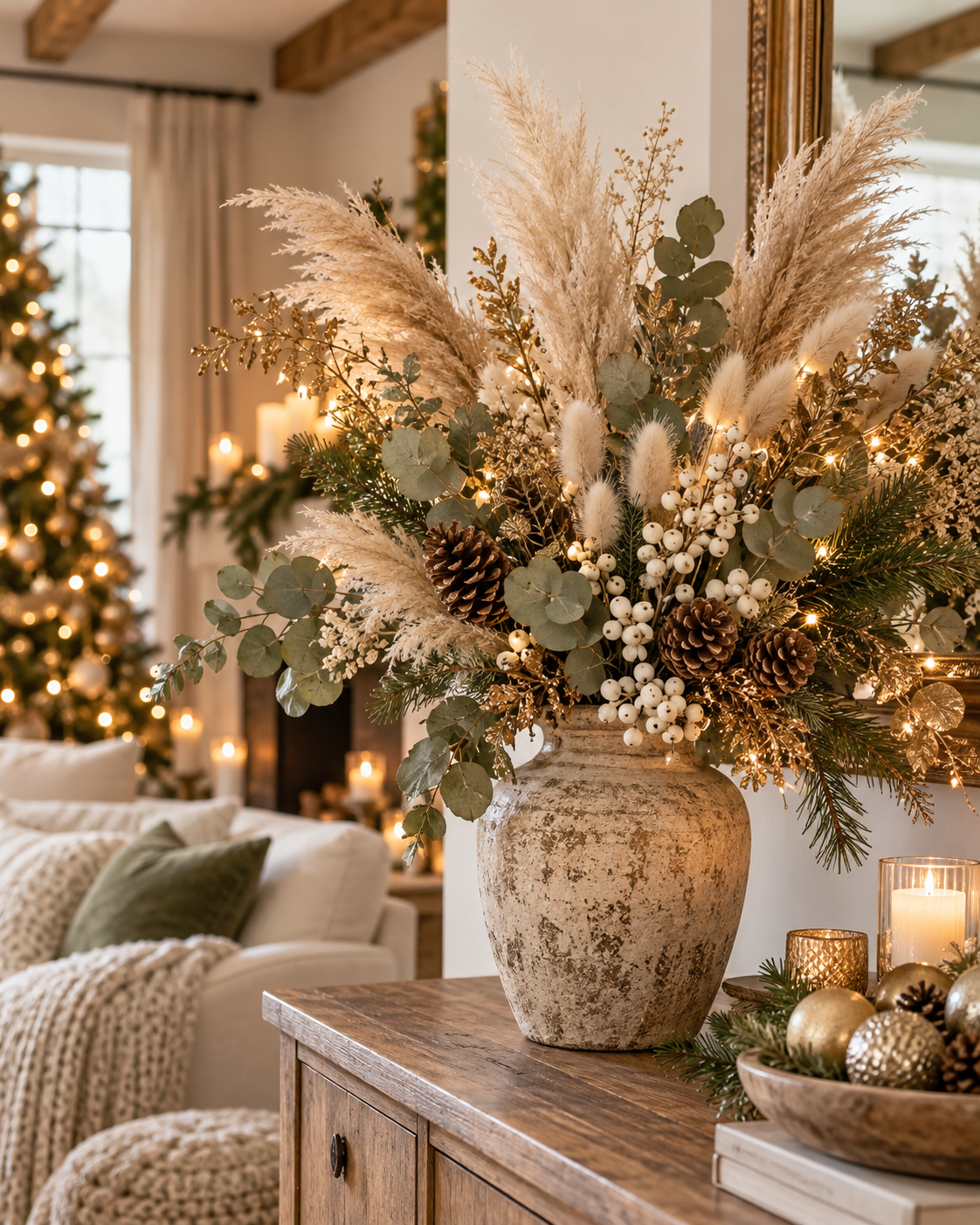
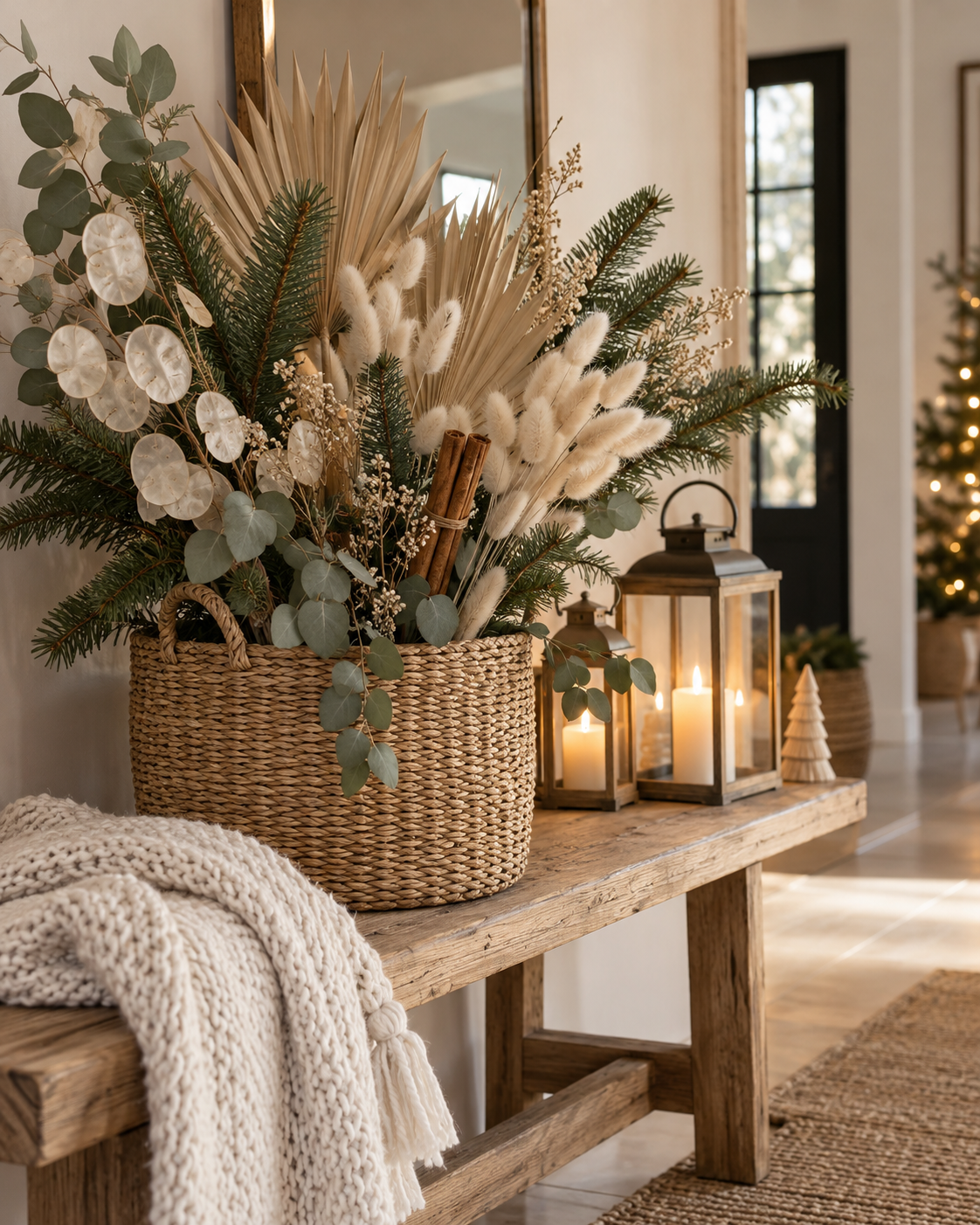
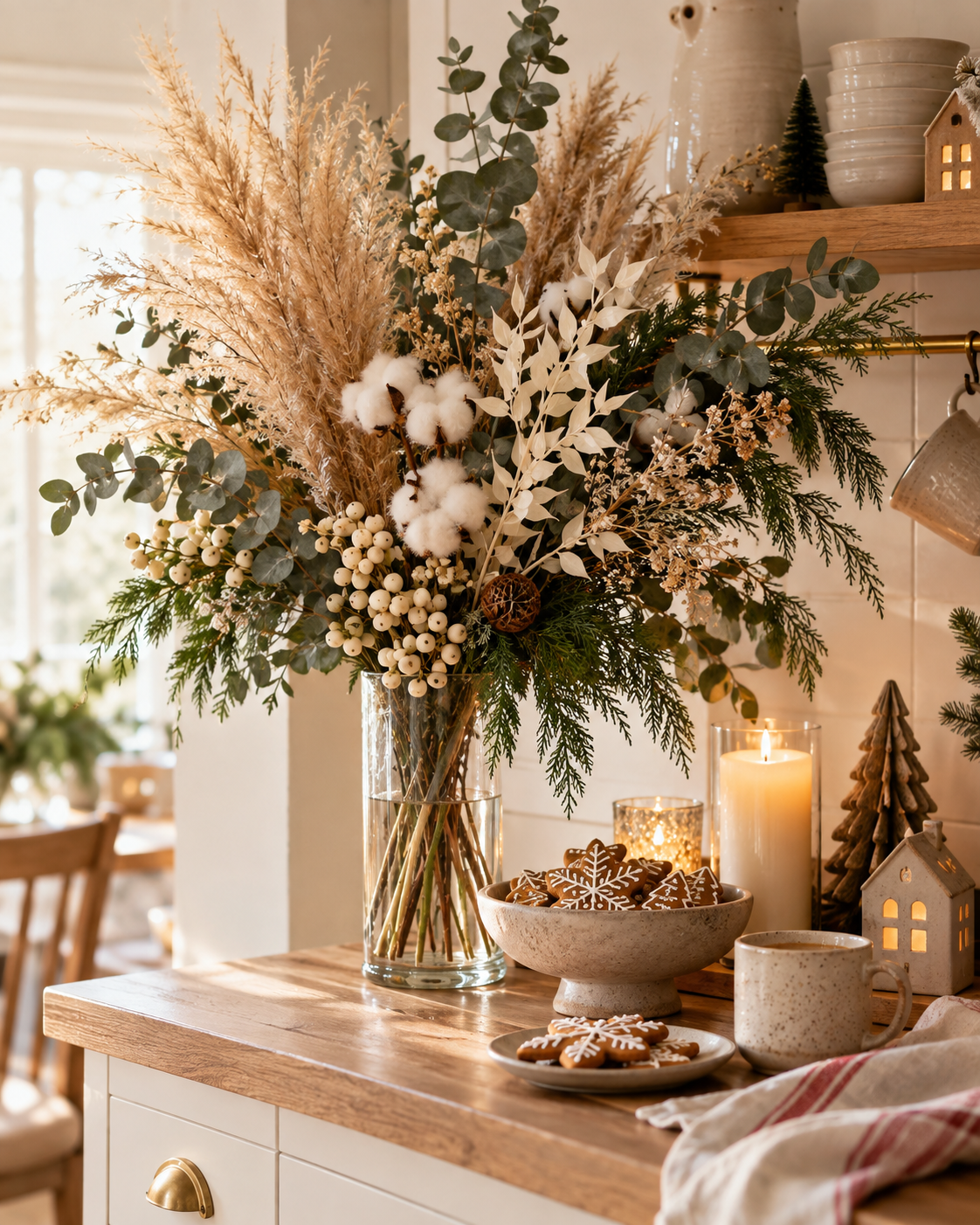
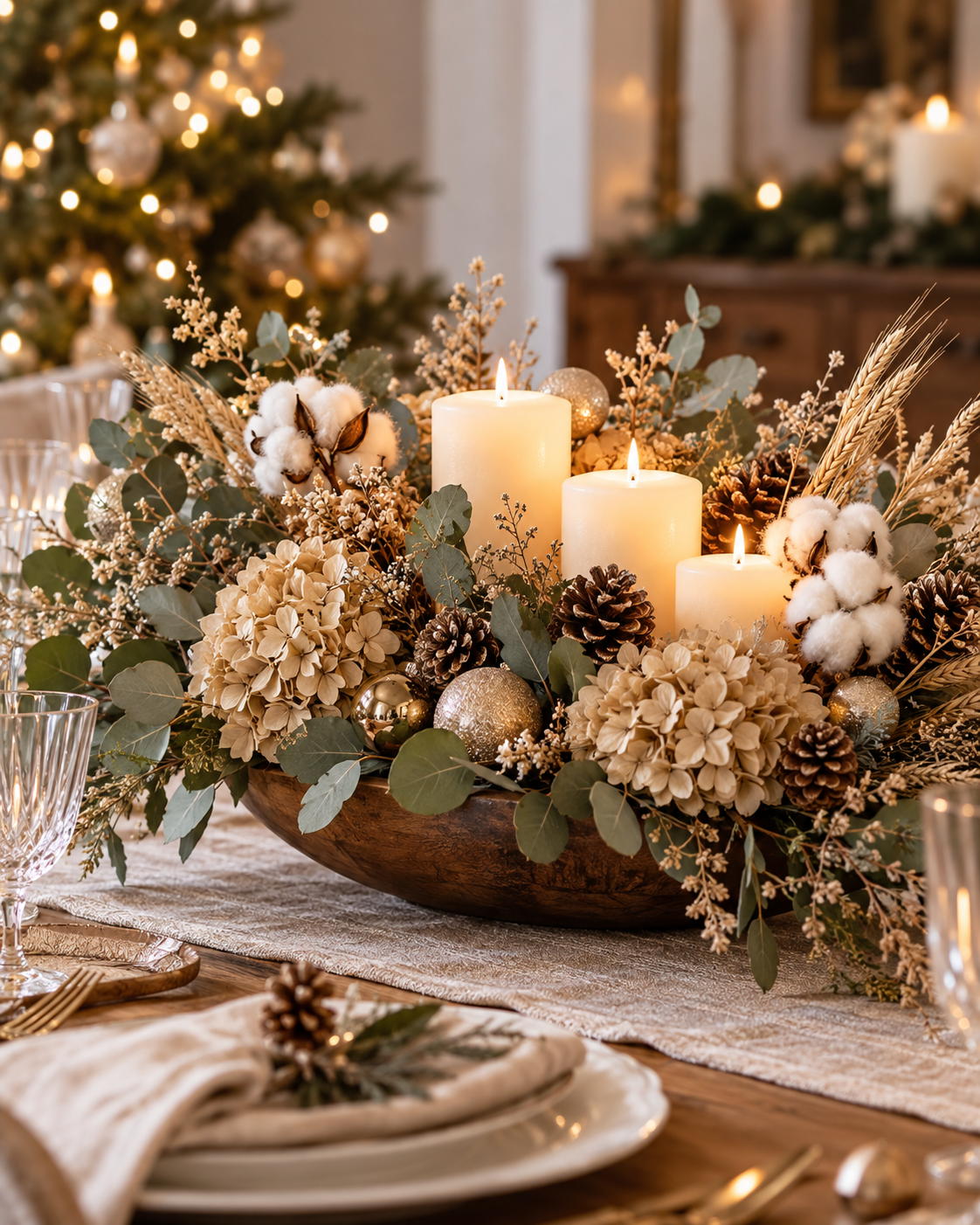
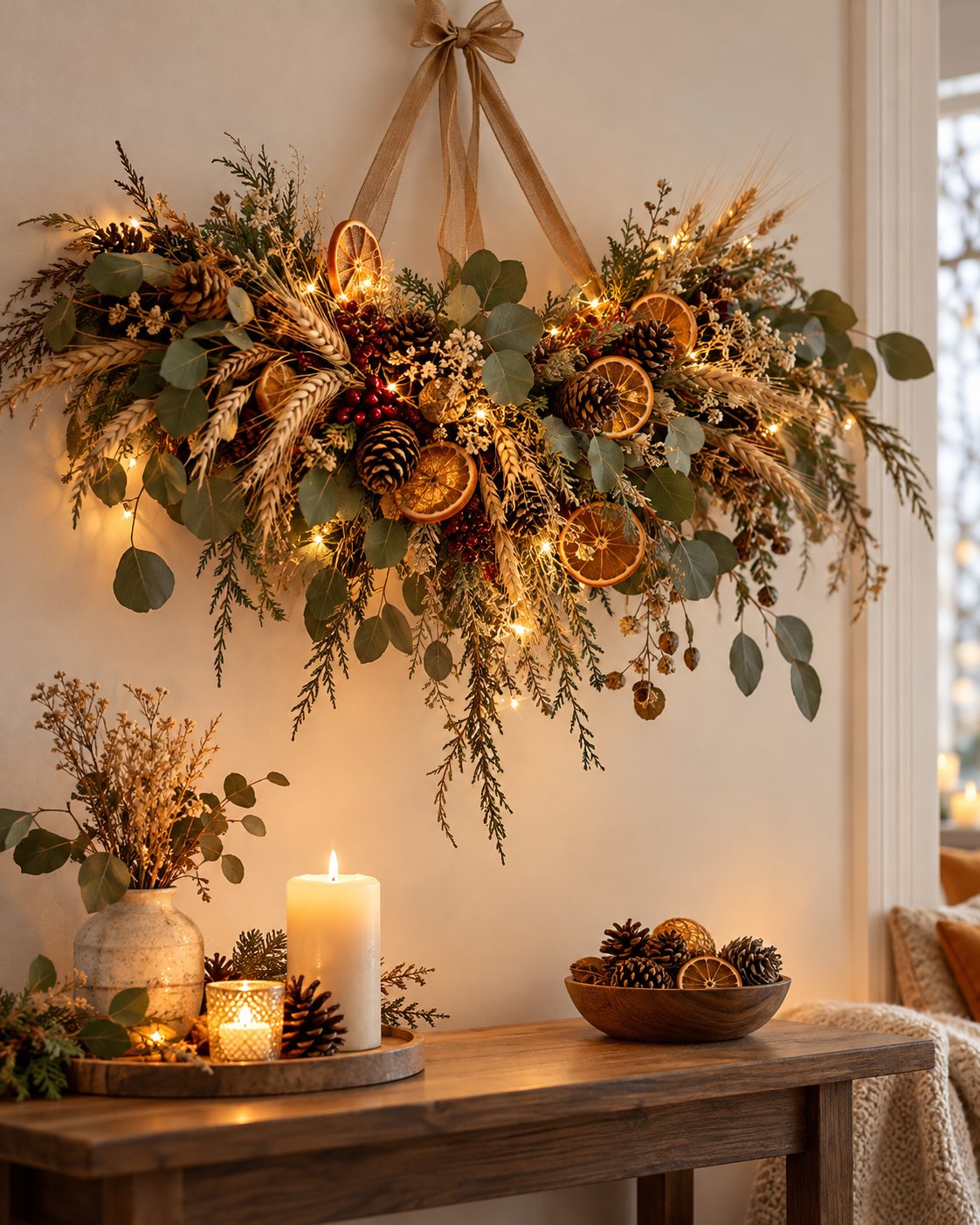
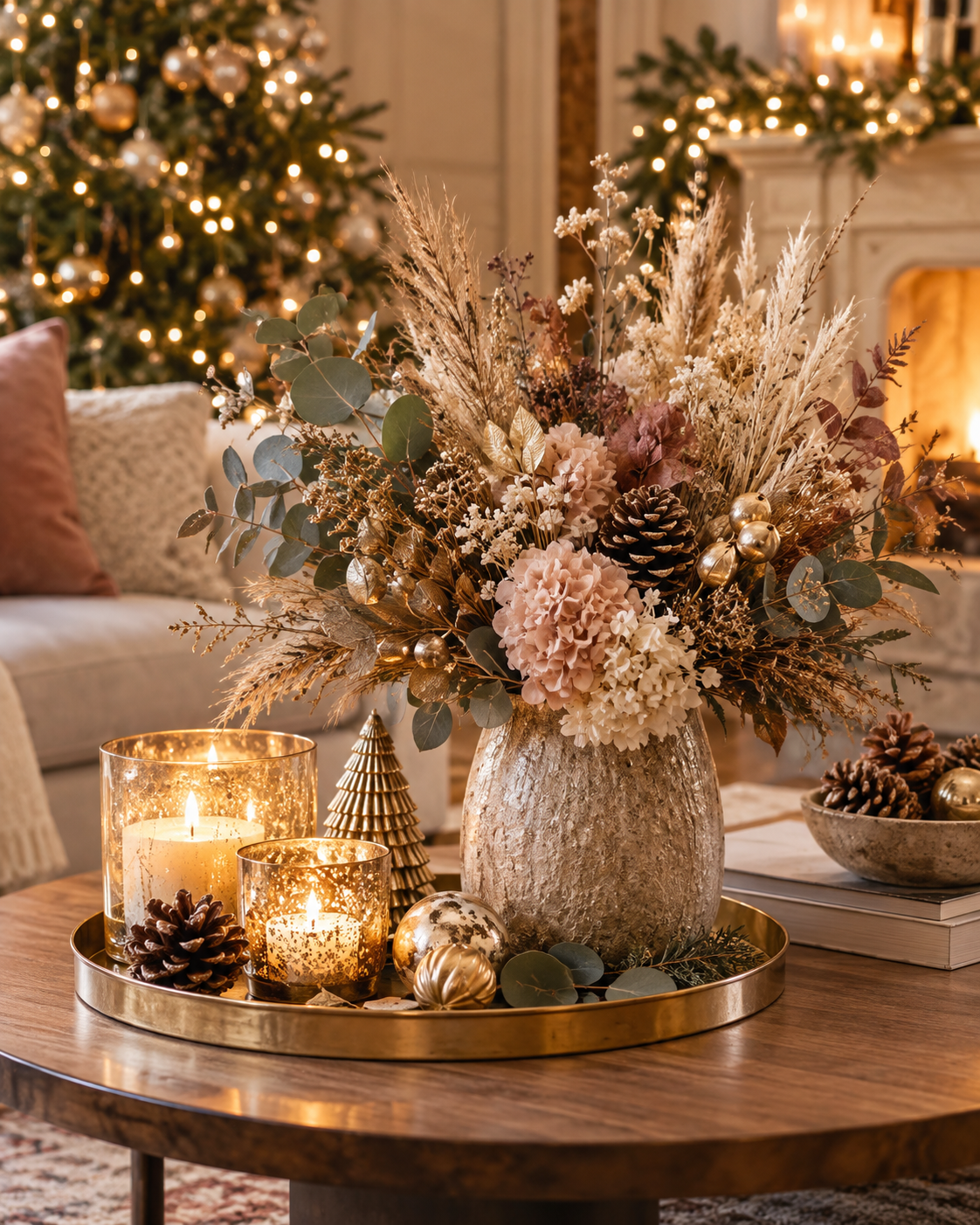
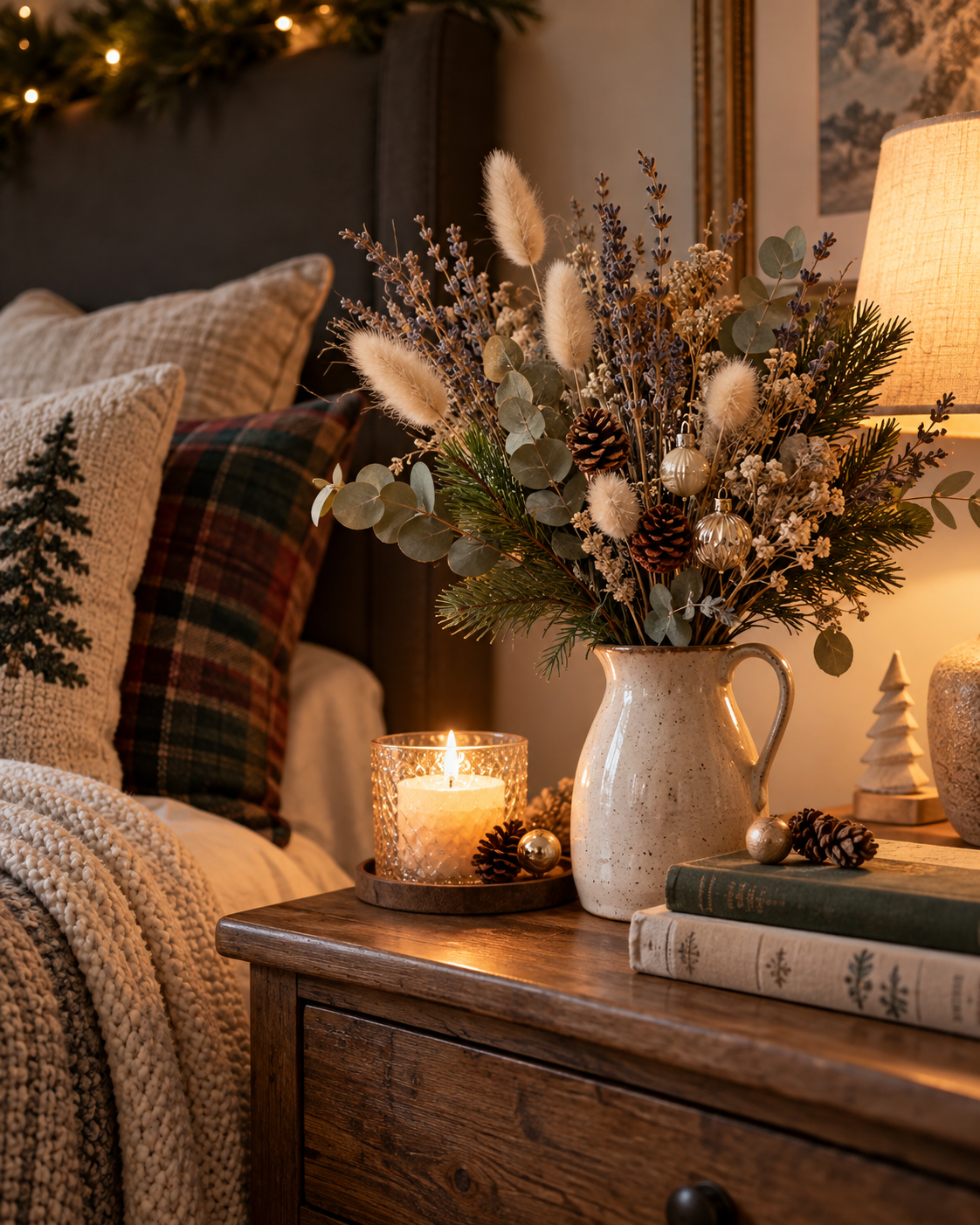
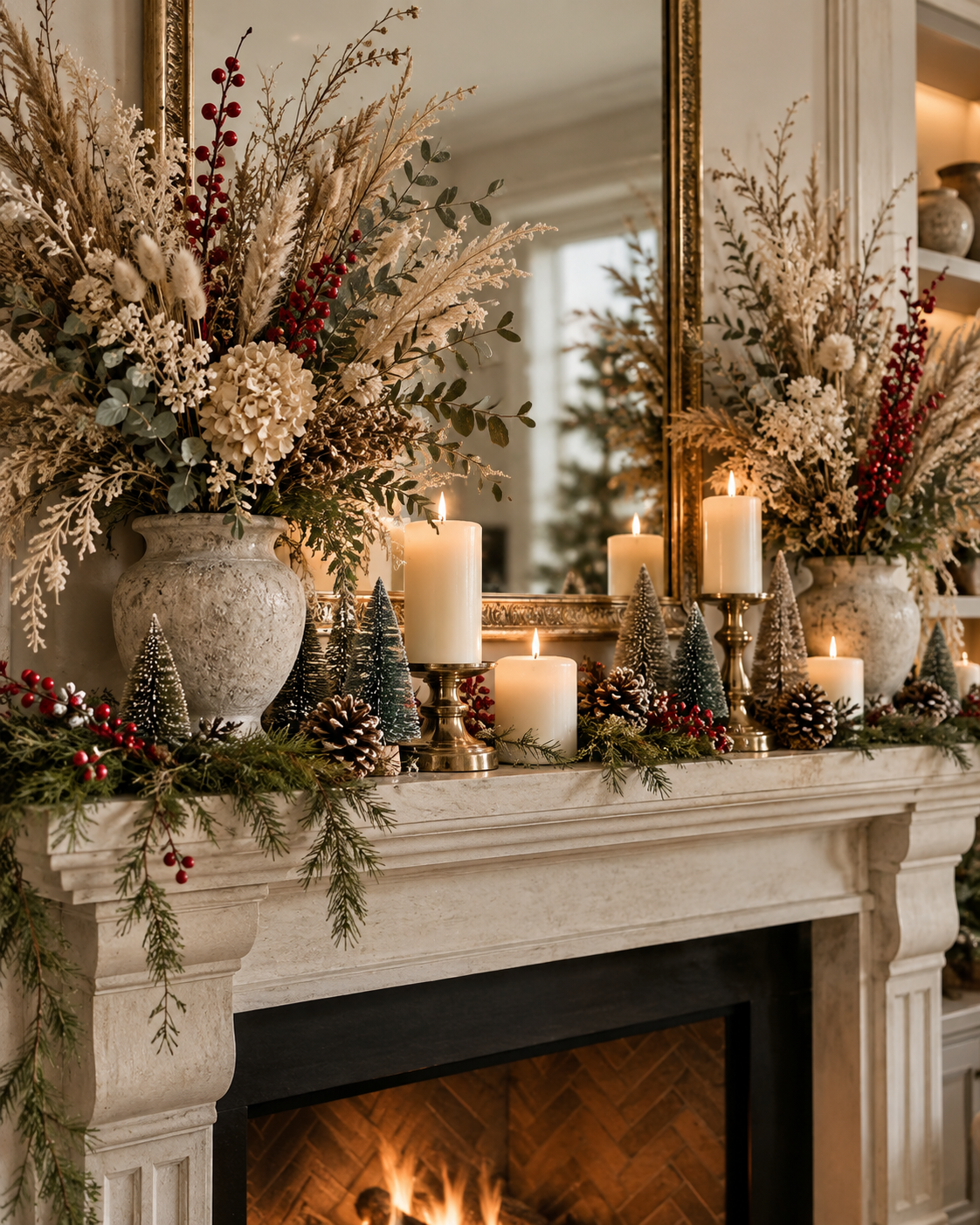
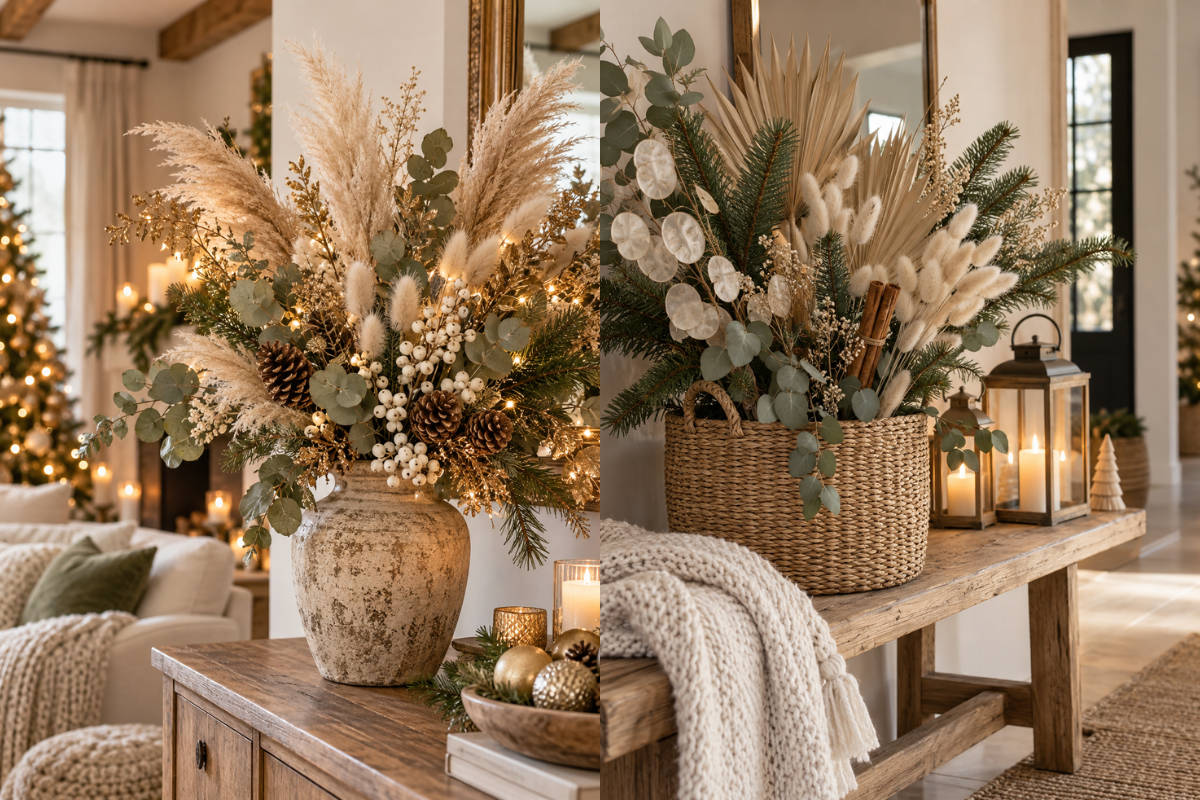
Bunny tails are a soft, fluffy grass whose oval seed heads dry pale and velvety, making them a favorite filler for natural holiday crafts. They add a cozy, snowy touch to almost any project. Eucalyptus is another great pick, and it dries far more nicely than fresh pine garland, which wilts fast on a warm mantel.
Cress is a lovely surprise for ornaments. Its tiny dried leaves cling softly to the inside of glass, almost like frost on a window. It works best in small amounts, so you can still see the other flowers.
Some plants are a poor choice for enclosed spaces. Dried sedum crumbles and leaves a mess inside ornaments, so keep it out of your baubles. Save it for open bowls, if you use it at all.
You do not need a big garden to begin. Store-bought blooms and flowers you grew both work well. Either way, drying them yourself saves money and gives you exactly the colors you want.
How to Dry Flowers at Home Before the Holidays
The best time to cut flowers for drying is mid-morning, once the dew has dried. Wet petals can turn moldy, so wait until the blooms feel dry to the touch. Choose flowers that are not quite fully open, since they last longer after drying.
If nothing is blooming in your garden, buy a few cut flowers to practice on. Grocery store roses are a cheap way to learn. Start about three weeks before decorating day, because air-dried and pressed blooms need that much time to make dried pieces you can use.
Air-Drying Roses and Lavender
Air-drying is the simplest method and needs almost no supplies. Cut stems at least 6 inches (15 cm) long, then strip off the leaves. Tie small bunches together with string so the stems stay snug.
Hang each bunch upside down in a dry, dark place with good airflow, like a closet or spare room. Leave them for two to three weeks, until the petals feel papery. Darkness helps the flowers keep more of their color.
Once they are dry, spray each bunch lightly with hairspray. The thin coat helps hold petals in place. It also makes them less likely to shed when you handle them later.
Drying Delicate Blooms with Silica Gel
Silica gel is a drying material that looks like very fine sand, and craft stores sell it. It works well on roses, tulips and chrysanthemums. These flowers often keep a fuller, rounder shape than they would hanging up.
Pour some gel into a container and set the flower inside. Cover it fully with more gel, filling gaps between the petals. Leave it alone for several days.
When the flower feels dry, lift it out gently. Brush off any gel stuck to the petals with a soft paintbrush. Finish with a light mist of hairspray.
Pressing Flat Flowers in a Book
Pressing gives you flat flowers that look lovely against glass. Place each flower between two sheets of absorbent paper, such as blotting paper. Slip the paper inside a book, then stack a few heavy books on top.
Change the paper every few days so moisture does not build up. Expect the flowers to dry in 2-3 weeks. Thin petals press faster than thick ones.
Once you have a stash of dried blooms, you are ready to craft. Glass baubles are the quickest first project.
How to Make Dried Flower Ornaments in Glass Baubles
One ornament takes just a few minutes once your supplies are laid out. The key is to work small, adding a few pieces at a time. You can make beautiful ornaments in one evening and still have time for cocoa.
These baubles also make a thoughtful gift for a friend who loves to garden. You can even use dried flowers from their own yard if you planned ahead. Tie on a tag with the flower names for a personal touch.
Supplies to Gather
Start with clear ornaments, either flat disc-shaped ones or round ones. Clear plastic baubles work too and are safer around kids and pets. Pick whatever size fits your tree and your flowers.
You will also need a thin tool to push and spread stems inside. A wooden chopstick, small skewer, dowel or pencil all work. Add your dried blooms, some scissors and ribbon for hanging.
Filling the Baubles Without a Mess
Remove the cap and lay your flowers out on a tray. Tear dried hydrangea into pieces small enough to fit through the top opening. Larger chunks will snag and break as you push them in.
Use rose petals as filler in the center of the ornament. Then place flatter flowers, like daisies, toward the outside so they press against the glass. This layering lets you see the prettiest blooms from every side.
Bunny tails need a little care. Never clip bunny tails right at the fluff; leave a few inches of stem. The extra stem keeps them standing up instead of dropping to the bottom.
Dressing Up the Tops and Hanging Loops
Plain silver caps can look a bit cheap next to soft flowers. Rub a little antique gold Rub 'n Buff onto each cap to give it a warm, aged finish. Let it dry before you put the cap back on.
Skip the plain metal hook if you want a softer look. Tie a gold organza ribbon into a loop through the top, then finish with a small bow. The ribbon catches the light beautifully.
A few filled baubles look lovely on their own. Still, the whole tree can bloom when you add bouquets beyond the glass.
Christmas Decorations with Dried Bouquets on the Tree
Tie three dried rose stems and one sprig of lavender together with string, and you have one ready bunch. Fasten it to a branch with the same string. Dried flowers stay pretty on the tree all season, so you can set them up early.
Start small, because a full floral tree needs a lot of bunches. One very full tree used 6 dozen of them. Try a dozen first and see how you like the look.
Tying Mini Bouquets of Roses and Lavender
Roses and lavender dried for about three weeks are sturdy enough to tie. Keep the stems about the same length so each bunch looks neat. Wrap the string tightly but gently so you do not snap the stems.
Mix colors as you go, pairing pink roses with purple lavender or cream roses with bunny tails. Spread similar shades around the tree so no spot looks heavy. If you love rustic looks, these ideas for Christmas decorations made with dry branches pair nicely with floral bunches.
Dried Flowers for the Mantel, Table, and Wreaths
Set the Christmas Eve table with a tiny bouquet on each plate, and every guest gets a small gift to take home. A mini bouquet at each place setting dresses up dinner without crowding the table. Tie each one with a ribbon in your table's colour so the whole setting looks planned.
The mantel is the next easy spot. Lay two bunches of trimmed eucalyptus around your mantel decor, then add a few roses and baby's breath. The look feels fresh and full of color, even in December.
Vases give you more room to play. A vase of eucalyptus and ilex, a plant with bright red berries, brightens a mantel or side table. Other dried arrangements in vases can bring back memories of summer.
Wreaths are another great home for leftover blooms. Dried flowers add soft color to a plain green wreath. For more natural Christmas decorations, add small sprigs of lavender or bunny tails between the greens.
Scent ties the whole room together. Fill a bowl or basket with clove-studded oranges, since the cloves help preserve the fruit. Mixed scents of flowers, eucalyptus and clove stay subtle rather than clashing.
With the tree, table and mantel dressed, your home feels warm and natural. You do not need to finish everything at once. One simple step is enough to get going.
Conclusion
A few dried blooms can change the whole feel of a room. They cost little, look natural and give your home a quiet, cozy charm. When the holidays end, these decorations can go straight into the compost.
The best choice is to start with one small craft. You will learn fast, and each piece will turn out better than the last. Your skills and your stash will grow together through the season.
This week, hang a bunch of roses or lavender to dry. If you cannot wait, buy some baby's breath and fill one glass bauble tonight. Wishing you a warm, blooming holiday season.