Christmas Porch Pots: 12 Winter Planter Ideas for Snow, Mild Winters and Covered Porches


Christmas porch pots can dress an entrance from late November to New Year when their materials suit the weather. Choose cut greenery for snow and hard freezes, living combinations for mild winters, sheltered decorations for a covered porch, or a compact arrangement beside an apartment door. These 12 outdoor Christmas planter ideas start with a classic evergreen pot, explained step by step, so you can build the shape before adding the festive details.
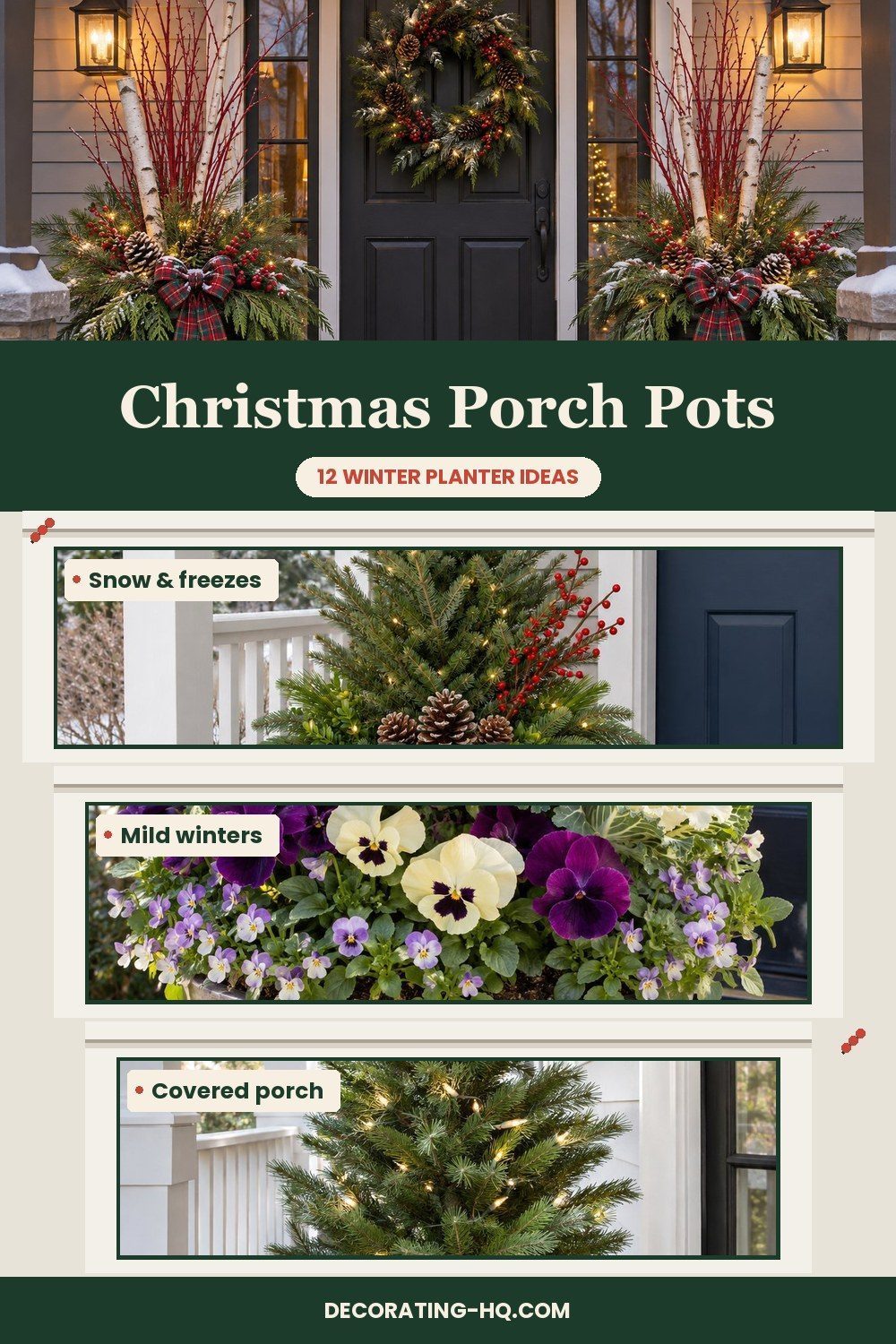
Snow and hard freezes
Classic evergreen porch pot, step by step
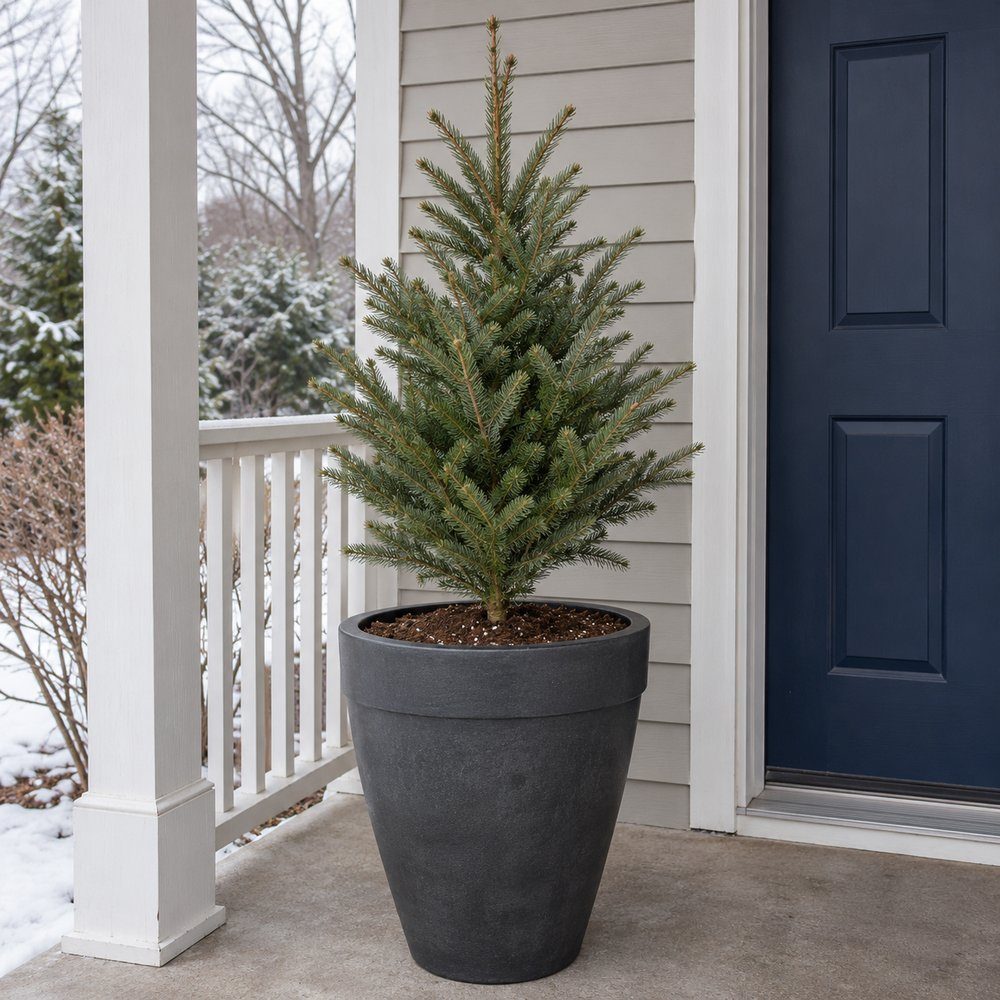
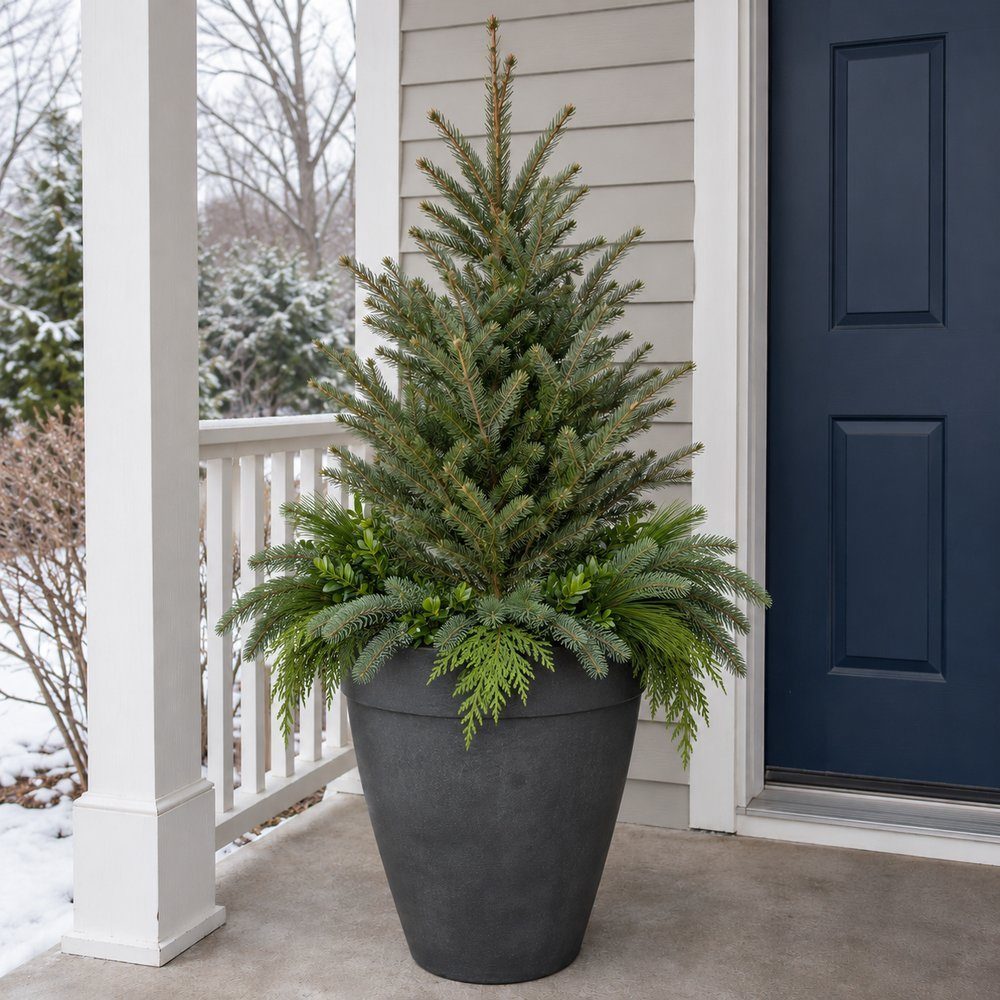
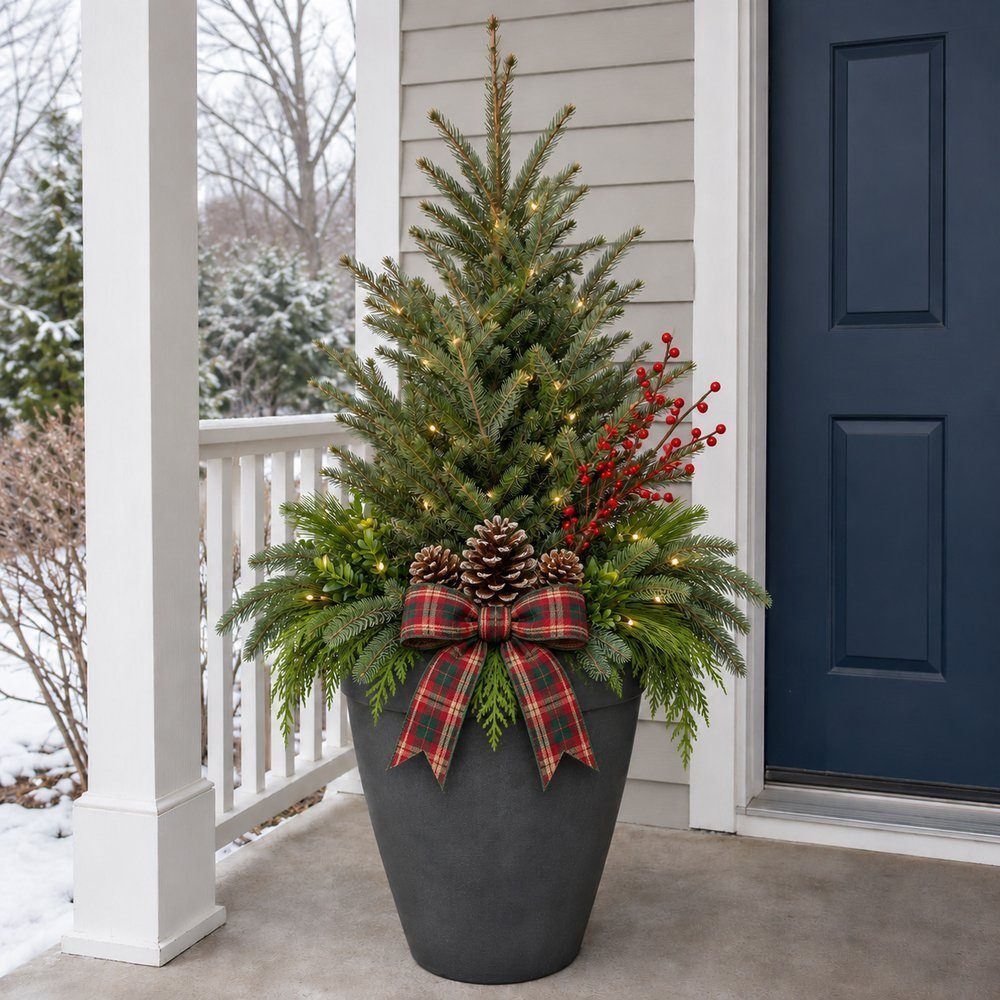
A spruce top gives this arrangement its upright shape; fir, cedar, boxwood and pine supply contrasting textures. The Growing Place starts with a 13-inch [33 cm] soil-filled pot, 4–5 kinds of greens, pinecones, winterberry, accents and a bow. Set the spruce in the center for an all-around display, or toward the back for a pot viewed from the front. Follow this adapted sequence from The Growing Place staff, The Growing Place.
- Start with a pot filled with soil.
- Strip low branches from the spruce top and push its trunk firmly into the center.
- Insert fir and cedar around the rim, angling some branches outward.
- Fill gaps with boxwood and pine, turning the pot as you work.
- Add the winterberry branch and pinecones in a loose triangle.
- Add your other decorative accents, such as branches cut at the intersections.
- Wire the bow onto a leftover stem and insert it last.
For another way to build winter porch pots, watch Laura of Garden Answer assemble living containers in “Simple Winter Containers!” The plant list includes spruce, hellebore, ivy and ornamental cabbage, making this a useful companion when deciding between cut branches and a planted arrangement.

Birch-pole woodland pot. Catie Trudeau of The Outside Design Studio combines birch poles with Fraser fir, incense cedar, magnolia, red huckleberry, variegated boxwood, sugar pinecones and faux red winterberry. This named material list is the reference for the container; the caption does not supply an assembly sequence. It is one of 14 holiday containers collected by Dayna Springfield, Garden Design.
Redtwig dogwood against a pale wall. Ellen Goldfarb and Tracy Buttrick used thick bunches of redtwig dogwood against the off-white stone walls at a front door in Saddle River, New Jersey. They added desert juniper, red winterberries, natural brown pinecones, silver bell eucalyptus, noble fir and incense cedar. The designers describe chunky planters, limited porch space, impressive doors and breakable lamps above as the constraints for this pot. This is one of several arrangements featured by GPOD Contributor, Fine Gardening.
Mild winters
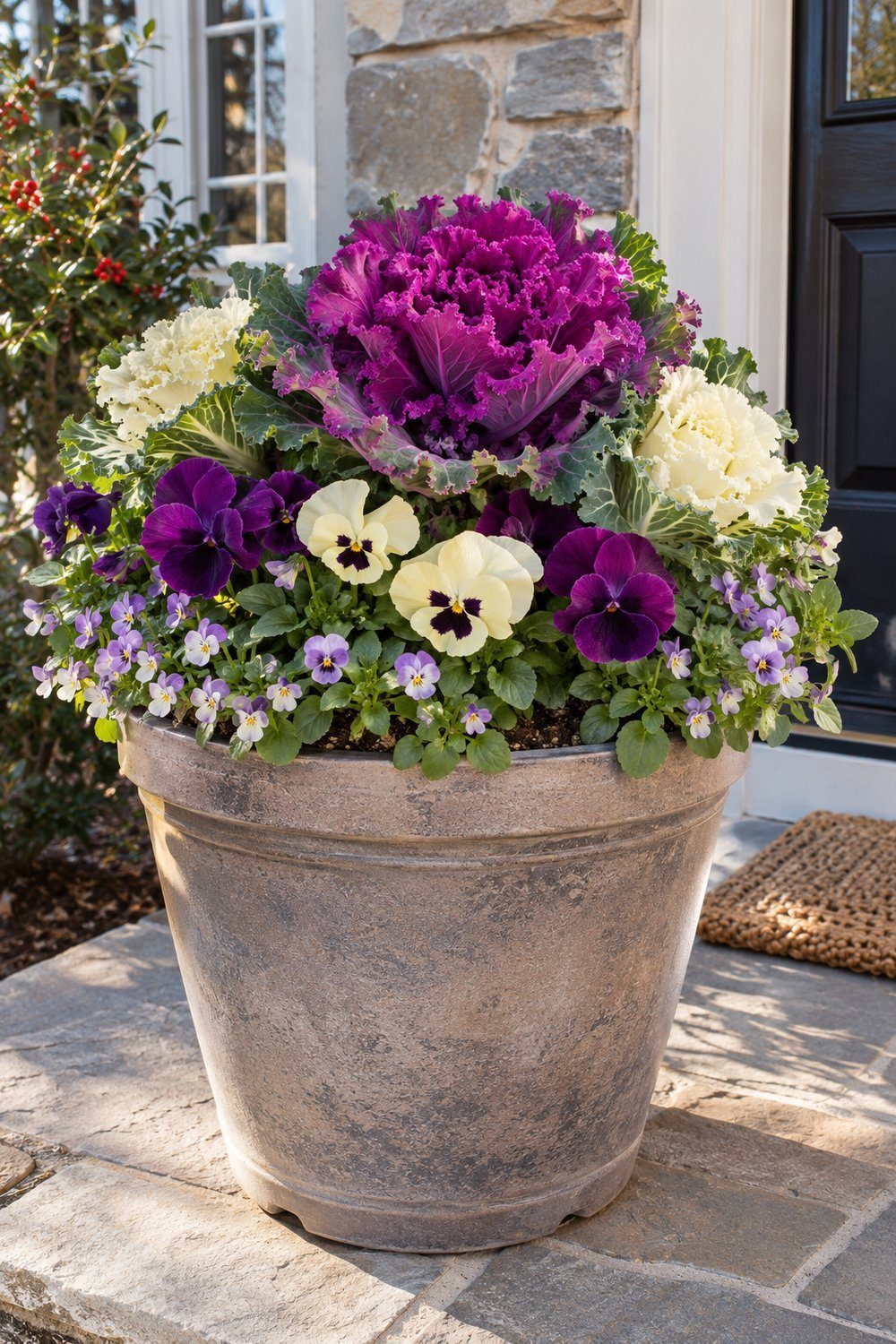
Ruffled kale with pansies and violas. Make ornamental kale the centerpiece, tuck pansies around it, and let violas soften the edge. Follow the nursery’s sun-container chart: kale provides the tall focal layer, pansies the middle, and violas the outer planting. Use a container with drainage holes and a bright position; the guide defines sun locations as receiving sun all afternoon or 6 or more hours of full sun during the day. Kale’s colored foliage intensifies as temperatures fall, according to Covington’s Nursery team, Covington’s Nursery.
Skimmia with a trailing ivy edge. Plant a small skimmia as the focal point, surround it with pansies, cyclamen and heuchera, and finish with variegated ivy spilling over the rim. Ruth Hayes suggests this layered approach among her winter planter options. Leave about 2 inches [5 cm] between the soil and rim for watering, then water to settle the planting. Choose a sheltered spot on the patio; when severe frost is forecast, move the pot into a greenhouse, porch or conservatory, or cover it with fleece, following Ruth Hayes, Homes & Gardens.
Christmas rose with heather and golden foliage. Combine Helleborus niger with heather and gold-variegated euonymus for winter color. The magazine suggests this trio for the euonymus foliage, the heather and the Christmas rose’s white flowers; it is one of several combinations on the page. Because plants grow little during winter, choose enough plants to make the display look good from the start. Mix grit with the soil and raise the pot on feet or bricks for drainage, following Scotland Grows staff, Scotland Grows Magazine.
Covered porches
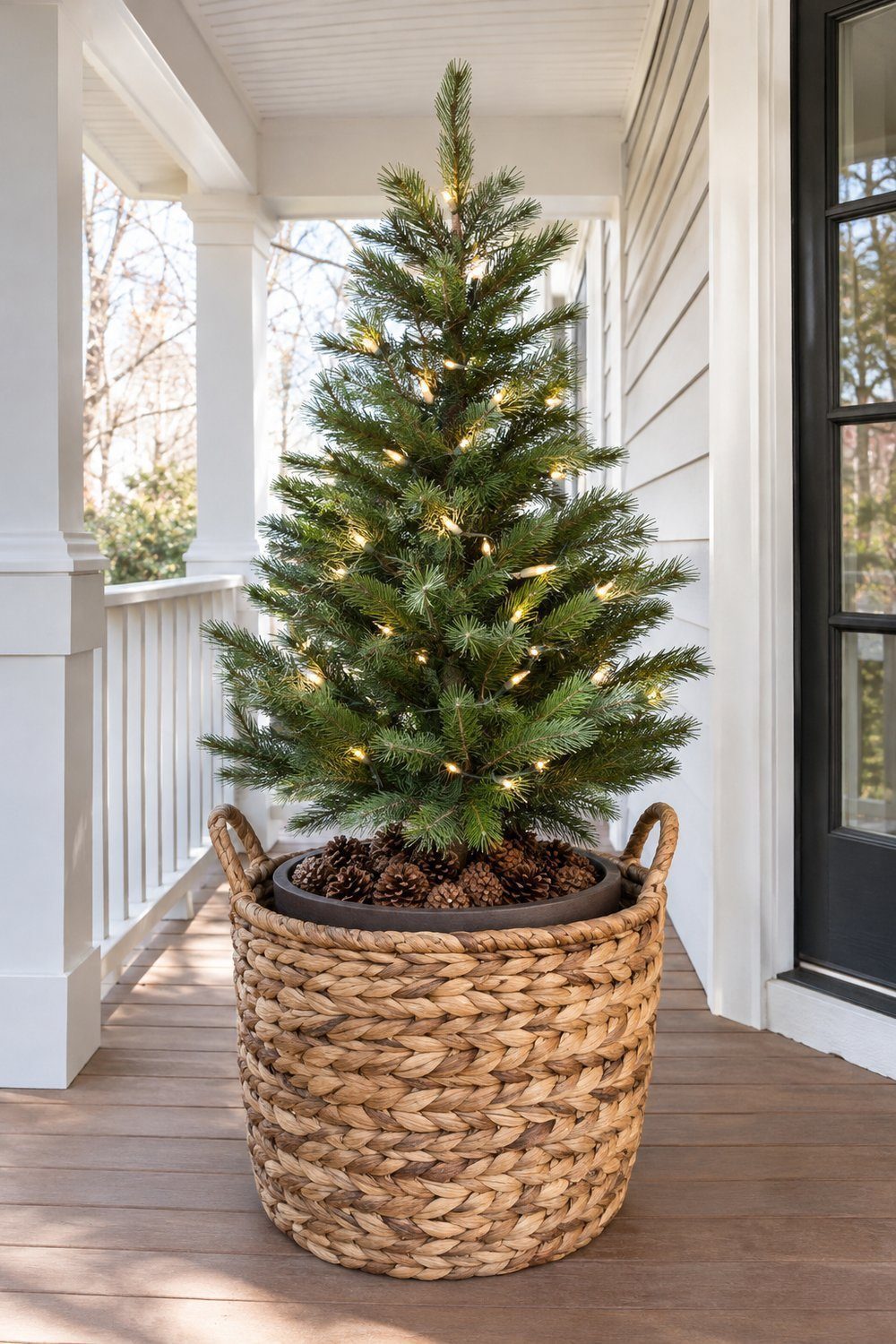
Lighted faux tree in a woven basket. Place a soil-filled inner planter inside a hyacinth basket, nests the small pot holding a faux tree into that soil, covers the surface with pinecones, and adds lights. Her inner planters measure 16 inches [41 cm], and she reports assembling the display in under 30 minutes. Put this version beneath a roof that keeps the woven basket dry, with lights rated for the location. The assembly comes from Ann Drake, On Sutton Place.
Lantern nestled in fresh greens. Start with a lantern and a candle wrapped in warm mini lights. Designer Karen Chopp suggests wrapping fairy lights all the way around the candle and decorating the base with fresh greens. The article presents this as a way to decorate with things you already own, among several ideas for winter containers and entryway displays. Follow this lantern treatment reported by Colleen Zacharias, Winnipeg Free Press Homes.
Window box with ornaments and blue berries. Choose the window-box example personalized with ornaments and artificial blue berry stems, one of several examples in this winter-container guide. For securing decorative details, the guide recommends attaching ornaments and pinecones to long skewers with wire or hot glue. Its general method starts with large structural elements, layers evergreen cuttings around them, and drapes cedar, juniper or pine along the edge. These are general instructions, rather than a separate material recipe for the pictured window box, from Teresa Woodard, Midwest Living.
One pot by an apartment door
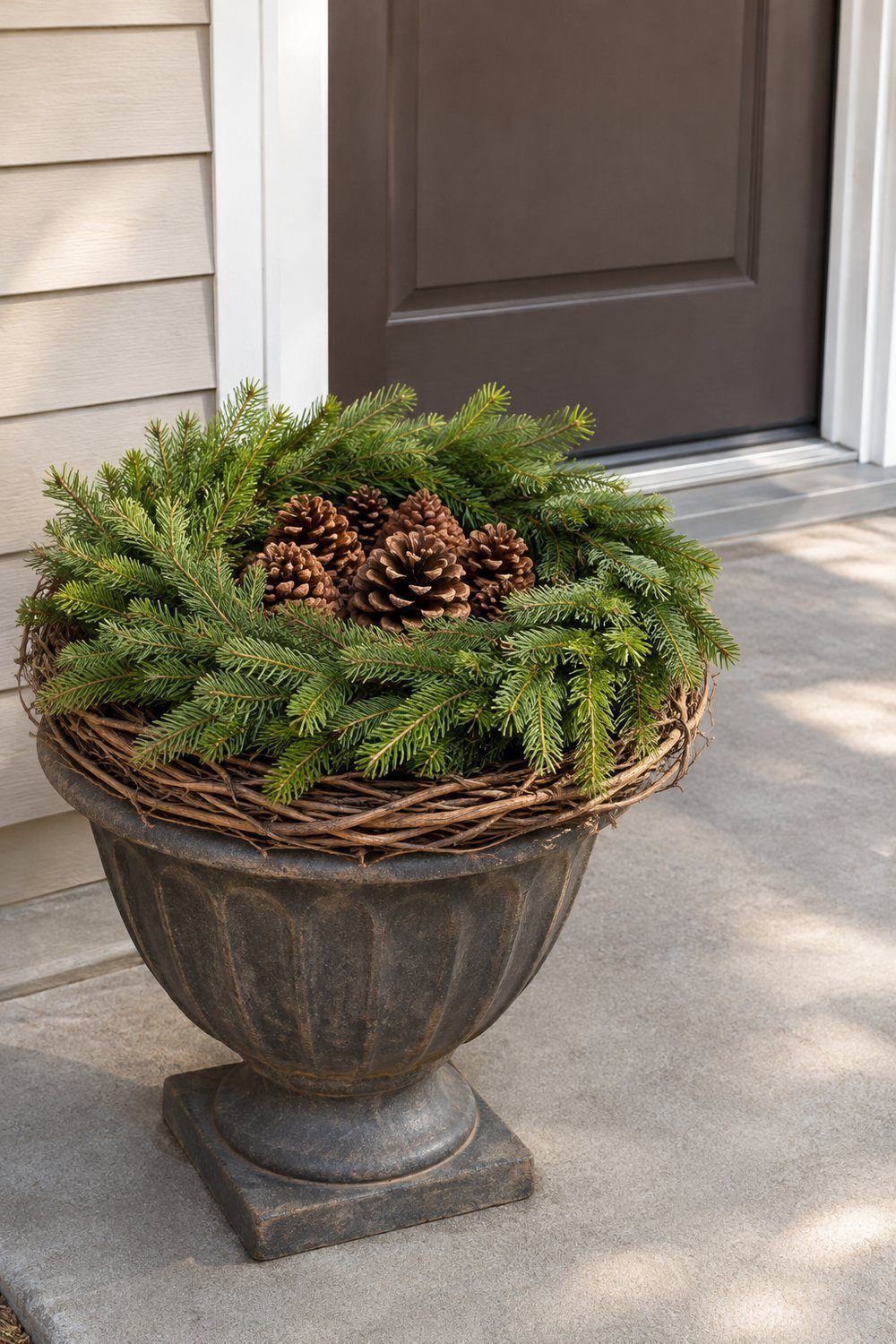
Wreath-topped urn. Rest a grapevine wreath on an urn, lay a fresh greenery wreath faceup above it, and fill the opening with pinecones. Pam Kessler’s version uses an 18–20-inch [46–51 cm] grapevine wreath beneath a 22-inch [56 cm] greens wreath. Allow for that full width beside the door; this option suits a broad landing. She gives a 10-minute assembly time and describes the look as appropriate into the new year: Pam Kessler, House of Hawthornes.
Dried-pomegranate harvest bowl. Use a shallow bowl for a sheltered, compact doorstep. Layer dried pomegranates with pinecones, rose hips, sweetgum pods and moss, taking the “Bowlful of Nature” composition as your starting point. Bring the pomegranates toward the front so their rounded shapes remain distinct from the cones and pods. Set the bowl back from foot traffic and under cover to protect the dried materials. This is one of the arrangements collected by Midwest Living editors, Midwest Living.
One-sided cypress fan. Against an apartment wall, build a one-sided fan of cypress. D.R. Snell Nursery starts its one-sided design with taller filler stems at the back and shorter pieces spilling over the front. Add specialty greens, magnolia, winterberry, pinecones and a bow. For a 12-inch [30 cm] pot, its supply guide suggests 12–15 filler stems. Keep the finished spread within the landing space; the one-sided method comes from D.R. Snell Nursery team, D.R. Snell Nursery.
Making it last until New Year
Water cut greens into their soil; frozen soil helps prevent drying, while prolonged thaws can require renewed watering, explains University of Minnesota Extension. The Growing Place also recommends an anti-desiccant for fresh-cut greens. For living pots, use frost-proof containers and raise them on feet or bricks to improve drainage and help prevent cracking, following the RHS Advice Team, Royal Horticultural Society.
Finish the entrance with Christmas door decorations beyond a plain wreath and carry the glow indoors with Christmas lantern decor for a porch, table or hall.